Wednesday, September 26, 2018

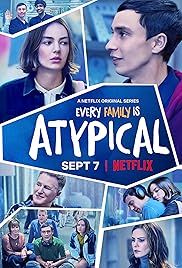
Atypical (Season Two)


Season One of Atypical was one of my favorite surprises so far this year. Robia Rahsid's show about autistic teen Sam Gardner (Keir Gilchrist) and his family hit a massive home run with its debut and while it was a tough act to follow, the show largely succeeded in continuing the highs in its second season.

Note: There may be some Season One spoilers below, but if you haven't seen the second season, I'll try to avoid ruining much.

The foundation for much of the plot of Season Two was set up during the prior season's falling action, so there were natural places for the show to go. Sam has to cope with life without regular visits with therapist Julia (Amy Okuda), Casey (Brigette Lundy-Paine) makes the move to Clayton Prep to continue her track career and has to cope with a generally hostile environment, and mom Elsa (Jennifer Jason Leigh) has to reckon with the consequences of her affair with the bartender from last season and try to get back into the good graces of husband Doug (Michael Rapaport, whom I recently discovered is in the middle of a weird tiff with Bartsool Sports).

As the season progresses, we witness Sam's attempts to become more independent as he looks ahead to going to college. Life is complicated between Sam and ex-girlfriend Paige, as the latter attempts to draw boundaries on their complicated relationship, which typically does not go according to plan. Similarly, Doug's (understandably) mean-spirited attitude toward Elsa results in rules for when she can and cannot see her children. The strictness of those rules gets tested once the reality of being a single working father begins to set in.

As in Season One, however, the heart of the show is Casey, who's stuck between the challenges presented by living with Sam, fully loathing her mother for cheating on her father, and having to attend a confusing school where she has absolutely no allies. She has to deal with Izzie, the captain of the track team, who is initially a major jerk, but inevitably the relationship between the two evolves over the course of the season. Casey's boyfriend Evan seemed almost too perfect in Season One, and sure enough, we begin to see some cracks in that foundation. Casey finds herself in the middle of two love triangles during the course of Season Two -- one predictable, the other far less so.

One of my favorite parts of Season Two was that we got to see and understand a good deal more of Sam's friend/co-worker Zahid (Nik Dodani), whose obnoxious (yet often very funny) schtick in Season One was carefully balanced out by his genuine affection and concern for Sam. Zahid's loyalty to Sam and willingness to help him in any way continues to be endearing, and we learn a little more about his family and ambitions, which is a welcome development. Zahid scenes were consistently highlights for me, and while Casey and Sam are the clear best characters on the show, Zahid is probably the most entertaining and the one I look most forward to seeing on screen.

The second season wasn't flawless, particularly with its minor characters. For example, I didn't buy Izzie's abrupt character shifts throughout the season, and given the way Evan was drawn in Season One, the few moments where it seems like he's being a dick feel somewhat fabricated. However, they largely did better with Paige this time around (which readers may recall was my lone real gripe about the first season), so that kinda made up for it.

Atypical continues to be a charming show that has a way of investing you in its characters (except Elsa. Elsa sucks). Dramedies seem to be pushing themselves more and more toward the drama end of the spectrum these days, but Atypical does a good job of keeping the laughs involved, even during the more serious episodes. I rate Season One higher, but Season Two was still very, very good.

Season Grade: A-

Tuesday, July 3, 2018

Jersey Shore Family Vacation (Season 1)


OK, so this is one of the more ridiculous consequences of my decision to write up every show that I watch.

Jersey Shore Family Vacation reunites the Jersey Shore cast five years later for a vacation at a beach house in Miami. The only missing member of the cast that finished off the predecessor series is Sammi "Sweetheart", who apparently wanted nothing to do with this cash grab. It's alright though, because in one of the very first gags of the series, Pauly D unveils a talking mannequin to fill in as Sammi, complete with catch phrases. They actually get pretty good mileage out of that one.

Everyone's a good deal older this time around and generally nowhere near as crazy as they used to be. Everyone in the cast save for Pauly is in a relationship, Pauly, Snooki, and Jenni all have at least one kid, and Ronnie has a kid on the way. That greatly limits the spectrum of antics that the gang can get into, and on multiple occasions they have to confess questionable (at best) behavior to their significant others.

Much of what they do is contrived and obviously scripted / set up by the show's producers. They're closed off from the general public at pretty much every bar or club that the gang goes to, and the background is just littered with people filming them or shooting pictures with their phones. Pauly "pranks" the house by inviting Angelina back, in a move very clearly set up by producer Sallyann Salsano & co. In another episode, Vinny's mom and uncle are "concerned that Vinny isn't answering the phone" (the crew happened to be in the Bahamas or whatever) and fly down to Miami to "check on him". I don't know why they even bothered to invent that reason -- why else would the crew be filming Vinny's mom and uncle at their home if it wasn't pre-arranged that they were going?

Mike "The Situation" is in a bit of legal trouble for tax evasion and will face a possible/likely prison sentence this upcoming September. He's a completely different person from his original stint on Jersey Shore, as he's completely sober (in the worst environment to test that commitment), generally doesn't make trouble for people, and eats enough to kill a horse. His pending engagement to his long-time girlfriend is one of the show's running storylines. Vinny's even more subdued than before, Ronnie's still a somewhat off-putting idiot that makes bad decisions, and the girls are basically shells of their former selves from a partying perspective. Pauly's the only one that's consistently likable. I honestly wonder what they do and talk about all day in that house, because it seems like most of them just sit around, bored to tears most of the time.

All of that being said, it's light and entertaining enough to watch for fans of the series. It's certainly no worse than the last season of Jersey Shore, which aired while Snooki was pregnant and Mike had already gone sober. There's a second season of this coming out soon because MTV is aware that it doesn't put out any other programming that people care about, and we'll definitely be watching. There's basically no reality TV in my rotation (it's this and Top Chef) because it's mostly garbage, and Jersey Shore Family Vacation is no exception. But these seven goofballs find a way to make it delightful garbage.

Season Grade C+

Wednesday, June 27, 2018

The Big Bang Theory (Season 11)


I'm more or less putting this up not because I really have strong thoughts on The Big Bang Theory, but because I'm trying to make an effort to at least have a log of the seasons of shows I finish this year. For awhile now, this show hasn't shown much special; it's mostly empty calories that we'll put on during dinner when we don't need to worry about having a full attention span. The show takes a lot of crap because it's far more popular than its quality, but if it weren't for its Nielsen rating, it'd be just another big-network sitcom you don't know anything about and there'd be no reason for you to throw rocks at it. Also, it would have been cancelled a long time ago.

This deep into its run, the story for all of these people is largely played out and they're more or less pushing these characters' lives forward because CBS is paying top dollar for it. 11 years in, four of the five original main characters are married (two of them to each other), and the remaining one, Raj, has been a relatively consistent weak spot throughout the show's run. The humanizing of Sheldon and Howard has given the show good material in the past, but by this point, they've become self-aware enough that it doesn't register as a "big" moment when they do something selfless. Leonard is a nothingburger who's basically been unchanged over the course of the show, is often annoying, and these days takes a back seat to the stronger characters.

Penny, who has somehow gone 11 seasons without being assigned a last name, has become a bright spot for the series, particularly because she's come so far from being treated as the naive "dumb one" by the show. Amy has also changed quite a bit between the robotesque character that met Sheldon in the coffee shop at the end of Season Three, so much so that it's hard to believe the current iteration is even the same person, but Mayim Bialik has been a consistently great presence on the show. Bernadette has been thoroughly unlikable for a long time.

While the show usually gets in some good jokes in an episode, the real reason this show became interesting in the first place was because it had strong characters like Sheldon (most obviously), Howard, Penny, and Amy. By now, everyone's become pretty stagnant and the show spent Season 11 churning out mostly forgettable plot lines. The exception was Sheldon and Amy's wedding, but they goofed that up by turning it onto an excuse to have Mark Hamill on the show for some reason, which distracted from what could have been a good tribute to the former pair's lengthy relationship.

We'll probably keep watching this show until the end, if for no other reason that it's light, digestible, and somehow has avoided completely jumping the shark (if the history of sitcoms has taught us anything, it's that shows containing uber-brilliant scientists have a tough time keeping things grounded in reality). There's just no reason to expect much from it.

Season Grade: C+

Saturday, June 23, 2018

The Bridge on the River Kwai


I have an irrational and unfortunate prejudice against old movies. I don't know why, but if you hand me any element of pop culture, be it movies, TV, or music, that was created before 1980, my knee jerk reaction is, "No thanks." Athletes have become progressively better at sports over time, and my theory is that the same goes for the ceiling of other aspects of pop culture. Modern actors are better, modern cinematics are better, modern writers are better, modern instrumentals and sound systems are better, and today's creators are able to build on a rich history of what works and what doesn't. Don't get me wrong, there's plenty of people butchering all three of those forms of entertainment today (particularly music....damn kids), but I think that at their peak, all three are superior to anything that existed forty years ago.

That's why I'm damn surprised that I actually decided to sit down and watch a consensus all-time classic in Bridge on the River Kwai. It's further surprising because I am not big into war films, and it I think it's honestly because I tried to memorize the AFI Top 100 a long time ago and it had a cool title that was always easy to remember. I looked up a plot summary years ago and it seemed interesting enough. It happened to be airing early on Father's Day, so I recorded it and watched it over the course of the following five days (this is how watching a movie operates when you have two children and a spouse who is not directly invested in the film).

Bridge on the River Kwai is the story of British prisoners in a World War II era Japanese prison camp. The Japanese commandant, Colonel Saito (Sessue Hayakawa), is under great pressure to construct the titular bridge over the titular river to connect Bangkok and Rangoon, as this is will be of great military benefit to Japan. The British prisoners are under the command of the respected Lt. Colonel Nicholson (Alec Guiness). Nicholson is principled to a fault (key word) and bravely insists that high-ranking officers will not perform manual labor on the bridge. At first, Saito reprimands him for this refusal, but his desperation to complete the project on time eventually leads him to concede this demand, as there are skilled engineers among the British officers.

Nicholson is appalled to see the British soldiers are intentionally doing poor work to sabotage the bridge (and thus abet the Allies' war effort). He takes command of the operation and insists that the British army should take pride in their work, both for morale reasons and to maintain their identity as soldiers. Meanwhile, an American in the prison camp, Commander Shears (William Holden), escapes from captivity. He eventually winds up as part of a four-man expedition under the command of the British army to plant explosives on the bridge and destroy it when a train carrying soldiers attempts to cross it.

The most important relationship in the film is between Saito and Nicholson. Nicholson's a prisoner, but Saito will be forced to commit ritual suicide if he can't complete the bridge on time, and he can't do it without Nicholson's help. The fact that Nicholson has superior leadership skills gives Saito great grief, but there's a palpable deepening respect that the two have for one another over the course of the movie. In the events leading up to the film's climax, they're practically one another's closest allies. That begs the question of whether Nicholson's attempts to maintain a sense of pride in the British soldiers actually bleeds into treasonous activity, as a proper bridge is of critical importance to their Japanese enemies. There's rich irony built into this story every step of the way.

The Saito/Nicholson plot is very strong, and Guinness wound up taking home Best Actor hardware for his efforts, which kind of surprises me after seeing the film. He was decent in the role, but I wasn't blown away. I thought Holden gave a better performance, even though Shears' arc was probably the most problematic thing about the film from a plot perspective. His team's journey to blow up the bridge was unnecessarily drawn-out and rather boring, despite Holden's charisma. Bridge on the River Kwai is a very long film, at 2 hours and 41 minutes, but there is certainly not 2 hours and 41 minutes worth of story here. They could have cut a good amount of Shears' scenes and been no worse for the wear.

I'm glad I watched this movie, but I don't think it did much to dispel my stubborn beliefs about things made more than a half-century ago. Bridge on the River Kwai is regarded as an all-time classic and a culturally relevant film. I can certainly understand that, as I could believe it was much better than anything that came out at the time. However, I just don't think it holds up against modern filmmaking, and the excessively long Shears storyline dings it, because it got just as much screen time as the good stuff. Rake me over the coals for this if you must.

Grade: B-


Tuesday, June 19, 2018

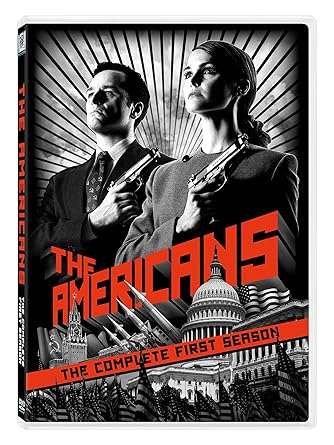
The Americans (Season One)


Modern TV is replete with antihero sagas and The Americans is yet another show to contribute to that ever-growing pool. Season One aired back in 2013 and the show has just completed its run. Naturally, given my proclivity to pick up things 5-10 years after they gain a foothold in the culture, 2018 was the perfect time for me to check out this show.

The Americans is a period drama set in the early 1980s during the Cold War. Elizabeth (Keri Russell) and Philip (Matthew Rhys) Jennings are the mother and father of two kids and own a cozy house in the suburbs. The catch? They're both KGB spies that have managed to hide this fact from their teenage daughter Paige and younger son Henry. The series juxtaposes their KGB activity (which involves murder, intimidation, deceit, extreme violence, sex, torture, and a whole lot of hand-to-hand combat) and mundane activities around their house and hanging out with their neighbors, who are none the wiser.

That last bit is particularly important, because their new next-door neighbors, the Beemans, include an FBI agent. Stan Beeman (Noah Emmerich) reveals his occupation when the families first meet, and the look on Philip's face is absolutely priceless. Despite Stan's initial suspicions, he and Philip become good friends, as do Elizabeth and Sandra later on in the season. Stan's a key man at the Bureau in charge of trying to track down Directorate 'S' KGB spies, and little does he know that the Jennings next door are exactly the man and woman that he's trying to catch.

Over the course of the season, Philip and Elizabeth meet their new handler, Claudia (a.k.a. "Grannie"), played by Esteemed Character Actress Margo Martindale. Their relationship with her is very complex, as she's extremely mysterious and they're never sure whether she gives a damn about either of them, whether she's just following orders, or whether she's got an agenda of her own independent of what's coming from Moscow. For Philip, Claudia may as well be a proxy for Moscow itself, as it's revealed as early as the first episode that he's not as beholden to the motherland as Elizabeth and he questions much of what they're doing over the course of Season One.

At it's core, The Americans is a show about relationships and how our lives -- whether we're spies in a foreign land or not -- relentlessly test how we feel about one another. As one might expect from an espionage show, the theme of trust is examined constantly, and it's not tied to the highs and lows of typical human relationships. Elizabeth and Philip were an arranged couple, so part of that relationship is going to be fake to some degree, but at the same time, their love for their children is completely real and everything they've been through on their mission forges a strong bond between them. Their marriage is a facade, but it has plenty in common with a real one.

There's a ton of action in Season One of The Americans and the compelling plot moves at a very brisk pace. There's some nits to pick in there (in particular, the murder of a minor character motivates another to reconsider their loyalties, but the relationship between the two was woefully underdeveloped, so much so that the change-of-heart barely makes sense), but it's certainly a very good show, and everything I have heard makes me pretty stoked to plow ahead with the rest of the series. At six seasons, it's going to be a bit of a marathon, but most likely a fun one.

Season One Grade: A-*

*if you're curious as to why nearly every show I've reviewed this year has a very high grade, I've made very little progress on lesser ones, and those I've finished (e.g. Top Chef) often don't merit a writeup. I promise that reviews of worse shows are coming, so get excited!

Tuesday, May 29, 2018

Ozark (Season One)


Disastrous season finale undoes some built-up goodwill, bringing the show's flaws into focus
*******************************************************

I mentioned in my year-end TV review that we dropped Ozark after the first couple episodes, not necessarily because it was bad, but because we sort of ran out of TV time and the early installments of the show didn't build up enough momentum to get us racing to the remote during a busy period of our lives. Eventually, months later, I picked it back up again and finished off the season, leaving me with some mixed feelings on the show.

Ozark is the story of Marty Byrde (Jason Bateman), a financial planner in Chicago (living in Naperville!) whose primary job is to launder money for a Mexican drug cartel. His primary contact with the cartel, Camino Del Rio ("Del", portrayed by Esai Morales) is a frightening man who seems to be highly intelligent, great at reading people, and also ruthlessly violent. In the first episode, a scheme goes wrong thanks to Marty's partner and Marty is forced to repay a debt to Del. He tries to do so by relocating his family to a small town in the Missouri Ozarks, where he must find a means within local businesses to clean a large sum of money for Del. Unfortunately, the locals don't prove to be quite as unassuming and manipulable as he expected, and the town has a dark underbelly of its own that becomes just as much of a threat to Marty and his family as the Mexican cartel.

Shortly after their arrival in town, the Byrdes become entangled with the Langmore family, trailer residents with varying degrees of greed and violent tendencies. Young adult Ruth Langmore (Julia Garner) is probably the show's strongest character in performance and writing (though I could have done without her wearing out the impact of the word "fuck" and its variants by the third episode). She originally steals some of Marty's money, but eventually becomes an ally of Marty's in his laundering scheme, despite continuing to plan to murder him and take all of Del's unwashed cash.

Marty's relationship to his family is tenuous at best, as in the first episode it's revealed that his wife Wendy (Laura Linney) is anything but loyal. Both are somewhat distant from their children due to a lack of being forthright about their business and their reasons for uprooting their lives. A particularly good (and necessary) flashback episode shows how Marty wound up in illegal dealings in the first place, and it's both an argument for and against whether the pair truly deserve the scorn that they get from their children.

The tone of the show is constantly dark with almost no room for humor, and as the latest in the long line of anti-hero dramas that have sprung up since Tony Soprano graced the small screen, that would basically require Ozark to boast a combination of strong characters, great acting, and heart-pounding drama for it to stand out. It doesn't quite complete that trifecta. Generally, both Bateman and Linney leave a lot to be desired from an acting perspective, but fortunately Garner, Morales, and several others in minor roles effectively bring their characters to life. The show does a good job of world-building once you get beyond the first couple introductory episodes and largely keeps the plot riveting throughout (Marty almost constantly has three different entities out to get him, which makes breathing room hard to come by).

Unfortunately, the season finale undermines much of what comes before it, as the show makes three major mistakes in going for misery-porn shock value and having someone make a blunder that's so out-of-character that it not only destroys a season's worth of development, but calls into question whether the show is interested in any of these people beyond their ability to advance the plot. The horrid finale shone a greater light on some of the show's season-long issues, which were forgivable until it lost sight of the things that were working. Suddenly, the relentlessly gloomy mood, the predictability of most plot twists (nearly every ostensibly low-key scene in the show either leads into or blatantly foreshadows something significant that will happen next; Ozark isn't interested in just slowing down and casually hanging out with its characters), and the weakness of the performance from the two leads weren't things that the fast-paced action could allow me to forgive.

The remainder of this post will contain specific spoilers regarding my problems with the finale and is only for people who have seen the show. If you'd like to read it, highlight the text below.

In the sixth episode, Jacob Snell threatens to cut Pastor Young's baby out of his wife's womb if Marty doesn't halt construction of the church. That's a horrific threat, but with a target that doesn't make a great deal of sense when directed at Marty. It's easy to shrug off as something that will never actually come to pass. When Pastor Young falters in keeping up his sermons on the water, preventing Snell's drug distribution operation from continuing, Snell actually follows through on that, and we cut to Pastor Young finding his new baby, which one of Snell's underlings must have actually cut out of his wife's body during or after murdering her. Moving past the fact that Pastor Young's wife didn't actually wrong anyone good or evil during the plot, it's just a universally disgusting thing to do. We didn't need any further evidence that the Snells were dangerous people; we got that from the very first scene they were in and got more of it later in this very episode. Even though nothing graphic was shown, there was absolutely no upside to putting that image in peoples' heads.

That was the least of the episode's three grave sins. The second involved the conclusion of the huge business deal between Del and the Snells. The whole season, Del is portrayed as a careful, calculating man who has a sixth sense for judging character. He's ruthless, but also very smart and generally speaks respectfully to those with whom he is dealing, even if he's about to have them killed. That makes what he does next so infuriating from the perspective of anyone who had already spent almost ten hours watching the show to this point. He turns away with Marty and says -- within clear earshot of the Snells --
"Only Marty Byrde can move to Missouri and somehow convince me to partner with a bunch of rednecks."
Darlene Snell asks him to repeat himself, and he's actually stupid enough to say it again! Only this time, Darlene shoots him dead before he finishes the sentence. The one nice touch is that it ties back to the Snells' earlier strong insistence that they are "hillbillies", not "rednecks", but that doesn't redeem it. To take a character like Del who has been portrayed as cunning and intelligent for the whole season and have him die because of such a foolhardy and unnecessary comment (which contained a slur uncharacteristic of the way he spoke all season long) is simply ridiculous. It seems like they were set on having Del killed off in the finale, but couldn't think of a natural way to do it and landed on this.

Finally, Pastor Young is unhinged after discovering his wife has been murdered. When Marty comes to visit him, he makes the comment,
"Why would I want to keep a baby alive in this world?"
Marty tries to talk him down, but then later in the episode, we see the pastor driving to a lake with the baby that was very recently cut out of his mother's womb. He stands in the lake and sort of violently pushes his infant son under the water and holds him there while the camera focuses on his determined face. The baby is fully submerged in the water for THIRTY SECONDS (I timed it) while the audience is mostly convinced that the pastor is drowning his son. The only possible alternative, of course, is that it's a baptism, and sure enough, the pastor eventually pulls his air-deprived son out of the water and makes the sign of the cross on his forehead. 

This is completely absurd, and involves a character behaving in an unrealistic way to trick and shock the audience. Holding a newborn underwater for thirty seconds is not anyone's definition of baptism; it more closely matches the definitions of "child abuse" or "murder". There is not a branch of religion or a human person stupid enough to do this. It's a completely unbelievable stunt that serves no purpose but to horrify its audience for a half-minute. Mission accomplished, I guess.

Season One Grade: C+
Monday, May 14, 2018

Barry (Season One)


For everyone who got here just after finishing this inaugural season of Barry....holy shit.

And for everyone else, um, welcome, I guess?

Unlike some of the other stuff I've been watching lately, Barry is a relatively easy show to explain. The main character, Barry Berkman (Bill Hader), is an ex-marine who became a hitman after his service, often applying a Boondocks Saints-like moral code to justify what he does; the people he kills are generally bad. His boss, Fuches, is friendly/chummy enough with Barry but there isn't a lot of regard for Barry's well-being there. One day, Barry's job leads him to an acting class led by Gene Cousineau (Henry Winkler). Attracted by the normalcy of it all, the camaraderie of the other people in the class, the chance to have a real hobby outside of his grim job, and to one of the other students, Sally Reed (Sarah Goldberg), Barry winds up taking the class. It becomes a bright spot for his otherwise bleak existence, but obviously, the difficulties of living a double life manifest themselves, and Barry spends most of the season staving off either getting caught or killed.

Despite the high stakes, Barry is a dark comedy, and most of the episodes pack plenty of laughs in addition to big dramatic moments. You'd typically think that the Chechen mob bosses that Barry becomes involved with would make for frightening individuals (and make no mistake about it, they mean business), but Goran (Glenn Fleshler) and Noho Hank (Anthony Carrigan) provide consistent comic relief. Noho Hank is small and polite to a fault, while Goran is built like your typical hulking thug. The show gets a lot of comedy out of Goran having a normal-ish family life outside of his mob dealings, sort of like a Chechen Tony Soprano (in a nice choice of props, there's a red Cozy Coupe with goofy eyes sitting in his garage, just lurking in the background while extreme violence and murder plots take place).

The show also plays plenty of attention to Gene's personal life, including his romantic pursuit of Detective Moss (Paula Newsome), who also happens to be investigating murders to which Barry is connected. Sally gets plenty of screen time too, as her efforts to land acting gigs are thwarted by both her mediocre (at times) ability, and more painfully, Weinstein-like characters that serve as gatekeepers to important roles. If there's one thing I have to pick on with this season, it's that there's a point in the Barry/Sally storyline where her personality and attitude toward Barry seem to shift without cause. Barry's left pretty confused by the sudden change, and as the audience, we feel that confusion as well. That'd be perfectly fine had we not spent so much time getting to know Sally independent of Barry. Because we're somewhat accustomed to seeing scenes from Sally's point of view, the abrupt character change without explanation leaves something to be desired.

Barry takes a bit to find its footing, and any minor sins from the somewhat uneven early episodes are compensated for by the action and hilarity in the last four. The season's falling action is a speed rap of plot developments, all of which are given the appropriate dramatic weight and some of which will leave you gaping open-mouthed. Anchoring all of this is the fantastic performance of Hader, who absolutely disappears into the role and captures a huge array of emotions from the vacant, dead countenance he often wears early in the season to the horror, anguish, and occasional happiness he shows later on.

I feel like I'm giving out very high grades for most things I've been checking out this year, but bear in mind that for me to actually watch a show to completion and feel compelled to write about it, there's probably a bias toward things I like a lot. I don't consider myself to be a 'soft' critic of TV, it's just that I'm on a big streak of watching pretty good stuff.

Season One Grade: A-