Wednesday, June 26, 2019

Game of Thrones, Season 8


This is another one of those reviews that I'm purely doing for completionist reasons. Everything that could possibly have been said about this show -- and particularly this season of this show -- has already been said. Furthermore, I'm not a major GoT expert. I read like 75% of the first book, saw the pilot episode, and drifted in and out of the plot line as my wife has watched it over the course of the decade. I watched Season 7 and Season 8 in full, and while I might not have the depth of the background that everyone else had, I knew enough about the key plot points and characters prior to Season 7 such that I was not hopelessly lost.

The prevailing opinion seems to be that Season 8 was disappointing. I found it to be fairly entertaining. The standout episode was "A Knight of the Seven Kingdoms", which featured the knighting of Brienne and all of the build-up before the Battle of Winterfell. The Battle of Winterfell was very confusing due to the weird choice to make everything extremely hard to see (exception: I thought the scene with the Dothraki torches being extinguished one by one off in the distance was pretty cool).

A lot of people were mad about Dany's heel turn, but it seemed like this was foreshadowed pretty well throughout the series and rooted in what we know about her character. She's had plenty of moments of kindness before, but she's been all about power from the jump, and her lean into the "tyrant" mindset wasn't all that shocking.

The final episode did a good enough job. It's impossible to tie up all of the many remaining threads in a way that satisfies everybody. I thought Drogon burning the Iron Throne was one of the weirdest scenes of the series. The decision to make Bran the new king was shocking to everyone except Las Vegas bookies, who apparently had that one nailed from the jump. Bran was such a weird goober for the entirety of the last two seasons and I didn't like much of anything they did with him (particularly given that his powers were basically useless at the Battle of Winterfell).

Tyrion's whole deal for most of the series is that he's smarter than everyone else, but the show's writers fashioned him into an idiot who couldn't see two steps ahead down the stretch, which was really odd. The show tied up Arya and Sansa's arcs pretty well, and Arya's story in particular in this final season was a strong point.

Another thing that I thought was strange was that Euron Greyjoy's fleet was so dominant against two dragons with support in one episode and then completely helpless against a single dragon the next. They didn't do a good job of making it clear why Dany was so much more successful the second time around.

Anyway, those are my scattered thoughts. They're even less coherent than usual because I know I'm not going to match the same passion for this show as the superfans and again, this season's been beat to death all over the place (plus, I'm getting around to writing this over a month late).

Season Grade: B

Wednesday, May 22, 2019

Barry (Season Two)


Season One of Barry was one of the best TV debuts of 2018, and for their work, Henry Winkler and Bill Hader cleaned up at the Emmy awards. Its eight-episode second act was often just as strong, despite a significant hiccup close to the midpoint. Barry Berkman's (Hader) story continues to get darker, as we learn more about the demons he's been fighting as he tries (often fruitlessly) to put his past behind him. He no longer wants anything to do with his life as a hired killer, including his inconsiderate handler, Monroe Fuches (Stephen Root) and his former Chechen mob connection NoHo Hank (a brilliant Anthony Carrigan). Both men inevitably re-insert themselves into Barry's life and he's once again forced to try to push forward in his acting class with Gene Cousineau (Winkler) and his romantic life with Sally Reed (Sarah Goldberg).

Sally's been a strange character since her introduction, and while her behavior would be extremely bothersome to be around, the show does a good job of drawing her as a self-centered mess. Her behavior can be absurd, but she feels real enough for her to come off as sympathetic when she needs to. The show digs into her past relationship with an abusive boyfriend, Sam, and we learn where a great deal of her insecurities come from.

In fact, Sally's so focused on herself that she remains completely oblivious to who her boyfriend Barry really is. Nearly all the time that Barry's around her, he's trying to deal with his recent awful deeds he commits, and she only notices that something's wrong when he needs to rehearse a scene or otherwise do something for her. Given Barry's journey in Season Two, the dissonance between their focus grows increasingly stronger.

That's because NoHo Hank approaches Barry early in the season and despite his usually-polite demeanor, he blackmails Barry into getting re-involved with the Chechen mob. Carrigan only has a scene or two when he has to get serious and isn't bubbly and upbeat, but he sells those critical ones enough to remind us that the Chechens are, in fact, dangerous. As a result of the events of the Season One finale, the local police push further into their investigation and when the cop leading the investigation eventually confronts Barry, it results in the most effective (and thanks to Hader's delivery) twists in the series to-date.

Unfortunately, that excellent episode is followed up by easily the weakest installment of Barry to-date. I hate it when highly realistic shows take a dive into the surreal (exception: The Sopranos), unbelievable, or supernatural when they've been making their bones on gritty drama. There's a particularly strange sequence in episode 5, "ronny/lily" in which Barry encounters the titular father who has what feels like nine lives and the titular daughter who, in addition to seeming unrealistically feral, seems to have the ability to climb trees, fall from great distances unharmed, and hover a little bit in the air. The whole thing was weird and didn't work at all for me. I've got no problem with a show trying to flex its creative muscle, but it felt like it would have worked better as a dream sequence or something.

The other storyline that didn't do much for me this season was Gene's attempts to reconnect with his estranged son. It just seemed like something that the writers forced in there, and it seemed pretty inconsequential. I'm guessing that they're laying the groundwork for something in the third season, but I wasn't invested in this story at all, and the payoff is uncertain for now.

Fortunately, Barry picked up right where it left off right after "ronny/lily" and this turned out to be just a one-off blip. The remainder of the episodes packed plenty of the tense drama that the show's becoming known for, along with a good dose of hilarity from NoHo Hank (the conversation he has over the phone with a furniture store regarding buying a table on which to put a cocaine shipment is comedic gold). I had read mixed reviews on Barry prior to watching this season, and my opinion is that it's certainly held up to its Season One strength.

Episode Grades
  1. "The Show Must Go On, Probably?": B+
  2. "The Power of No" A-
  3. "Past Equals Present x Future Over Yesterday: B-
  4. "What?!": A
  5. "ronny/lily": D
  6. "The Truth Has a Ring to It": A-
  7. "The Audition": A
  8. "berkman/block": B+
Season Grade: B+

Monday, April 29, 2019

You're the Worst (Season Five & Series Review)


Season Four of You're the Worst was its weakest, and the fourth season is where many shows lose their footing and can't maintain the quality demonstrated by its earlier seasons. Sometimes, the show never recovers (The Office) and sometimes they come roaring right back in Season Five (The Sopranos). Fortunately, You're the Worst was able to stick the landing after it looked like it was losing its grip.

Much of the season centers around the buildup to Jimmy and Gretchen's wedding, including the first episode, which focuses on Jimmy and Gretchen meeting a wedding planner. They invent this whole backstory about how they met. The scenes of this story are played out by different actors in the first 10-15 minutes of the premiere, and I got sucked into it pretty good. The whole time I was also just wondering whether I was even watching the correct show, since Stephen Falk made the interesting choice for his main characters to not appear until about halfway through the episode.

Another standout episode was "Zero Eggplants", which was You're the Worst's sweet spot between comedy and drama. Jimmy and Gretchen actually meet another couple that they don't hate and really get along with. They get close, but the woman in the couple, Rachel, utters the quote:

“Here’s how it is with me. I don’t let just anyone in, but I don’t lose people. So once you’re in, you’re in for life.”
Predictably, that's too much for Gretchen, who immediately sabotages the friendship. Gretchen's commitment issues are well-documented (hell, they're a healthy part of the rationale for the show's theme song), but even the lack of surprise can't stop her actions from being gut-wrenching to watch.

That was quite the emotional contrast to one of the series' funniest scenes earlier in the episode. Jimmy embarks on a quest to fellate another man in an effort to make things up with Gretchen (incidentally, she was sort of joking about that, which makes the whole thing all the more crazy). Jimmy finds a man on an online dating app, but his efforts to be sexy fall woefully short, and he spends most of the encounter spitting obnoxious intellectual blather, which earns him some pretty swift rejection.

Another unforgettable episode was "Bachelor/Bachelorette Party Sunday Funday", in which the gang busts Sunday Funday out of retirement for an insane episode with a thrilling sequence that involves Vernon getting stabbed by a deranged Paul F. Tompkins, and then Tompkins getting shot by Jimmy in defense of Edgar. The whole thing was staged, which was great not only because Jimmy and Gretchen got goofed, but also because we finally got some payoff out of Edgar's comedy writing career, which had been a consistent weak point of the series over these last couple seasons.

The last thing to discuss is the finale and the ultimate closure of the arcs for all of these characters. I found the finale somewhat odd, even if the conclusion of Jimmy and Gretchen's storyline makes sense. The show foreshadowed the commitment issues of each, and sure enough, they bail on the wedding. However, they make a resolution while eating pancakes at a breakfast restaurant to choose each other every day. It makes sense, because each one has only been able to function in the relationship as long as they know they can have one foot out the door at any given time. Without the specter and formality of a marriage hanging over them, they're able to pursue their love in a way that makes sense for what we know about the way Jimmy and Gretchen operate.

The conclusions for the rest of the cast are hit-or-miss. Vernon and Becca (who, by the way, is the actual worst, if we're keeping score) seem to move past many of their issues, and Vernon starts to get back on his feet financially. Edgar gets his clean break from Jimmy (after telling Jimmy not to marry Gretchen, in one of the series' most shocking moments) and has come a long enough way to pursue his career successfully.

Other stories didn't work as well. I actually thought that Paul's storyline came to a natural, if weird conclusion in "The Pillars of Creation", in which he gets intimate with Vernon and Becca. The three seem almost like a family afterwards, but the show has other ideas down the stretch and pairs him back up with Lindsay, who re-marries him. That didn't make a lick of sense to me, as the pair couldn't be worse for one another and the last time they were together, Lindsay stabbed him with an actual knife, in what looked like a possible shark-jump for the series. This all comes after Lindsay's random two-episode stint as a lesbian, which she seemed to shrug off as quickly as the show did. I was disappointed in Lindsay's arc all season long after she practically carried the show in Season Four, and You're the Worst seemed to have no clue how her story should end.

Those blips aside, Season Five of You're the Worst had some of the series' best episodes and found its peak form for extended stretches. Falk & co. went out strong in their final season of a show that was bursting with humor, creativity, and feeling. They took a show about two cynical, selfish jerks and turned it into easily the most unconventional romantic comedy I've ever seen. It's not part of the inner circle of the best shows of all-time, but it's practically a lock to go down as one of the greatest hidden gems of the Golden Age of Television.

Episode Grades

  1. "The Intransigence of Love": A
  2. "The Pin in My Grenade": B
  3. "The One Thing We Don't Talk About": B-
  4. "What Money?": A-
  5. "A Very Good Boy": B
  6. "This Brief Fermata:": B+
  7. "Zero Eggplants": A
  8. "The Pillars of Creation": A-
  9. "Bachelor/Bachelorette Sunday Funday": A
  10. "Magical Thinking": C+
  11. "Four Goddamn More Days": B
  12. "We Were Having Such a Nice Day": A-
  13. "Pancakes": B+


Season Five Grade: A-

Series Grade: A-

Monday, April 22, 2019

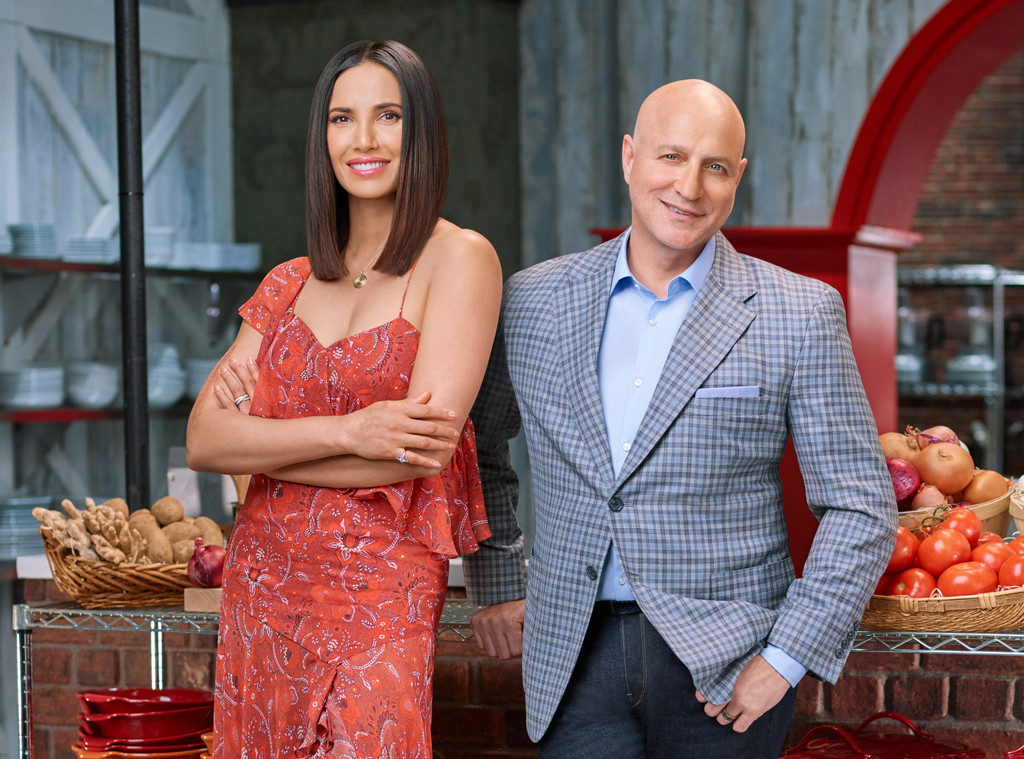
Top Chef (Season 16)


I've never recapped Top Chef before because the quality is relatively consistent from season to season. But I've been making more of an effort to just log the shows I watch, so here's some observations from Season 16.

  • There was no powerhouse chef (like a Paul Qui or Kristen Kish) to speak of from this season that simply steamrolls everybody. That made the question of who was going to win it all a little more interesting to follow, but it's hard to actually know who was the "best" chef of the group
  • I wasn't particularly invested in any of the individual chefs this season except for Eric. I was hoping he would win, and maybe he'll get another chance to compete if they continue this practice of re-admitting chefs from past seasons to the competition.
  • Speaking of re-admitting past chefs, the one time that there was anything resembling a conflict among the contestants was when Brother Luck made it back into the competition. Overall, this crop was a likable group of people, but apparently they liked each other so much that the thought of having Brother compete alongside them was too much. From just the under-their-breath snippets and what we saw in the confessional, they were legitimately awful to Brother, who has to be one of the nicer contestants the show has ever seen. This reflected well on no one.
  • Another interesting issue was a team competition early in the season in which Eddie used up nearly all of his team's budget and felt so bad about it that I thought he was going to voluntarily eliminate himself at Judges Table. Ultimately, one of his teammates went home for a mistake that wasn't related to what they had to shave off of their shopping budget, but I definitely felt bad for him and wanted him to do well the rest of the way.
  • Nini must have been much more likable off camera, because the group seemed very loyal to her. The editing made her seem very abrasive.
  • Brandon came off as super arrogant in the first couple episodes and seemed impossible to work with, but he really did seem to make good decisions in the kitchen and seemed more helpful later on. He was frequently snapped up as a sous chef to help for challenges later in the season, which I never would have guessed after watching him early in the season (both that he'd be an eliminated chef and that someone would actually want to work with him)
  • That Kelsey and Sara were both friends before this competition had to make competing in the finale a wild experience. They both handled it well, and I have to imagine that both understand that the runner-up gets so much value in exposure that "losing" isn't really losing.
Season Grade: B-

Wednesday, April 3, 2019

The Marvelous Mrs. Maisel (Season Two)


After a very strong first season, I was pleased to see that The Marvelous Mrs. Maisel was able to turn things up a notch in its sophomore campaign. The show explores Midge's continuing progress toward stardom, including battles against Sophie Lennon, unhelpful gig bookers, her family, and per usual, misogyny. Unlike in Season One, there's fewer questions surrounding Midge's comedic ability and more focus on how difficult it can be for a woman in the late 50's to make it even if talent is taken as a given.

The best arc of the season involves the three episodes in which the Maisel family heads to a summer vacation spot of sorts in the Catskills with many other families. Susie, still trying to get gigs for Midge, humorously finds a way to get room and board at the site simply by walking around carrying a plunger (to which she develops emotional attachment), because everyone assumes that she's on the janitorial staff. One of said gigs puts Midge's comedy life and her family life on a collision course in possibly the most dramatic and hysterical way possible. "Midnight at the Concord" is probably the high point of the season, and the series' best episode other than the Season One finale, "Thank You and Good Night".

The series' other characters have excellent seasons as well. Susie gets noticed for her talents as a manager, and Abe's descent into madness over the course of the season is extremely amusing to watch, because Tony Shalhoub sells the eccentricity so well. Joel continues to grow as a sympathetic character, and a guy who could have simply been a knucklehead who was written out of the show after the first episode gets a chance to grow as a businessman and a person. He even has a few heroic turns during the season. The show's handling and development of Joel has consistently been a strong point of the series, and he's probably the best-drawn character other than Midge.

There's no shortage of cliffhangers at the end of Season Two as Abe contemplates a career change, Midge's comedy act could take a dramatic new turn (which may test her professional relationship with Susie), and Midge's romantic life is an absolute whirlwind. The little universe this show has crafted is extremely well put-together, and I'm very excited to return to it for Season Three.

Season Grade: A

Friday, February 15, 2019

The Marvelous Mrs. Maisel (Season One)


If you watched last summer's Emmy Awards, you know that The Marvelous Mrs. Maisel absolutely cleaned up, winning the awards for Comedy Series, Lead Actress in a Comedy Series (Rachel Brosnahan), Supporting Actress (Alex Borstein), and Casting for a Comedy Series. It was straight up dominance, and after watching just a couple episodes of the excellent first season, it's not hard to see why everyone was so in love with the show.

Maisel is set in the late 1950s in New York City. Miriam "Midge" Maisel (Brosnahan) is a housewife to her husband Joel (Michael Zegen) and their two children. Both Midge and Joel come from Jewish families, and the show explores their often complicated relationships with their parents. It's established early on that Midge is essentially a flawless supporter of Joel, going over the top to make him happy and help him to be successful. In particular, Joel is an aspiring stand-up comic and though he's not funny at all, he achieves whatever modest success he has to Midge's assistance with preparing him and setting up his gigs.

Joel is unappreciative of what he has in Midge and winds up leaving her, which leads to Midge getting drunk and trying her own hand at stand-up comedy. She's wildly successful, which gets the attention of Susie Myerson (Borstein), who encourages Midge to pursue comedy and becomes her manager. That's essentially the set up for Season One.

Over the course of the season the show covers the fallout from Joel and Midge's separation, including the complicated effect it has on the parents of each. Midge's stand-up career has its ups and downs, and the difficulties of trying to make it in the comedy world -- even for someone as clearly talented as Midge -- are made clear. Maisel has rich, multi-dimensional characters; even Joel, whose behavior early on garners him no sympathy, experiences a great deal of growth to the point where he's not completely loathsome by the end of the season (which is really saying something).

One odd observation I had about the first season is how little Midge and Joel interact with their children. Midge ostensibly goes out all the time to practice comedy and enjoy parties. She seems to enjoy the relative freedom of a childless woman. It seems like she just dumps the kids on her parents all the time. I have two kids who are each about a year older than the two kids on the show, and as my wife and I are in a comparable stage of life, it just seems bizarre to me. 

Brosnahan is absolutely stellar in the lead role, and Borstein is hilarious as the sarcastic, quick-witted Susie. Tony Shalhoub was nominated for an Emmy for playing Midge's stern, math-professor father, and I thought that was a well-deserved honor. Maisel kept us laughing throughout while keeping us invested in the characters' storylines. Season Two is out now as well, and while we have some other TV to catch up on in the interim, continuing this show is pretty high on our priority list.

Season Grade: A-

Sunday, February 10, 2019

The Good Place (Season Three)


Season Three of The Good Place picks up the reboot initiated at the end of Season Two, with the four humans back on earth and given a second chance to improve themselves enough to make it into The Good Place. The show has essentially (and necessarily) taken on a different premise for each season to keep the plot from getting stale and it has largely worked. It's a good, consistent comedy with sharp wit and superb writing.

In addition to laughs, The Good Place is a contemplative show that continuously considers the question of what it means to be a good person. There's things that are obviously bad, like the crimes that Jason's father Donkey Doug (plot twist!) and Pillboi commit, but the show digs even deeper this season into exploring the unintended consequences of ostensibly good actions. It points out that life on Earth has gotten so complicated that it's practically impossible to make decisions that have perfect levels of morality, and nearly all that we do has shortcomings. It's a bit of a grim message, and a rather overwhelming one. The Good Place effectively distracts from these big questions with well-timed laughs, but it presents them nonetheless.

The falling action of the season created some drama in Eleanor and Chidi's romantic relationship, and I suppose how well that hits home depends on how much one truly buys into the pair as a couple. I never really saw it, and it's probably because it felt like Eleanor forced it after finding out that they fell for each other during some of the simulations. Plus, it's hard to see the romantic side of either character given how their exaggerated flaws (Eleanor's selfishness, Chidi's indecisiveness) have tended to dominate their characters over the first few seasons.

The show set itself up for yet another reboot in Season Four, and it's clear from the outset that there's going to be some pretty high emotional stakes for its main characters. I look forward to seeing what Ken Tremendous & Co. have in store for us next.

Season Grade: B+