Sunday, November 24, 2019

BoJack Horseman Season Six (Part One)


When it was announced that Season Six of BoJack Horseman would be its last, I was somewhat sad. At the same time, though, it felt like the series was heading toward the point where there needed to be some form of resolution, lest the cycle of its titular character taking one step forward and two steps back every season begin to feel tiresome. Each year, BoJack's struggles and self-defeating tendencies changed in scope and intent enough to keep the show feeling fresh, but it's not a formula that could continue forever.

And so, Season Six finally presents us with a version of BoJack that we've never seen before -- a good one. There's been bits and pieces of modest improvement in his character over the course of the show, but each time, these triumphs have proven to be fleeting, and it's only a matter of time before he self-destructs again.

This time around, it doesn't feel like the rug is going to be ripped out from under us. BoJack spends much of the season in rehab and seems committed to avoiding drugs and alcohol. The last episode he's a part of involves him breaking away from his house (a site of no shortage of awful memories from the past) and going around to make amends to the various members of the main cast. He has a good discussion with Todd, and later gets a woman to sign up for his asexual dating app ("All About That Ace"). He gives Princess Carolyn a nudge in the right direction, and indirectly convinces her to re-hire Judah to help give her more time with her baby, Ruthie. BoJack and Mr. Peanutbutter finally sort of get their "crossover episode" on the set of their shows at the Smithsonian. Finally, he visits Diane and gives her the inspiration she needs to begin treating her depression with medication, followed by performing the kind gesture of cleaning her house.

BoJack Horseman has saved the most crushing moments for its seasons' penultimate episodes, so it was interesting that they flipped the script by using this one to give happy and hopeful endings to each member of the main cast. Of course, the finale was still to come, and it was one of the most brilliant episodes that BoJack Horseman has ever done. None of the five main cast members appear in the finale. Instead, it's an episode that checks in on several minor characters whose lives BoJack has significantly affected. This could fail on a lot of shows, but Hollyhock, Kelsey Jannings, and to a lesser extent, Gina Cozador, have been so well-developed that they're more than able to carry a full episode by themselves (I love it whenever the show brings Kelsey back).

The conclusion of the finale, however, invites trouble ahead. Hollyhock's at a party and meets a guy named Peter, whom (::pats self on the back::) I immediately recognized as Penny's friend "Pete Repeat" from the series' best episode, "Escape from L.A."  The show cuts to the credits just as Peter is about to reveal to Hollyhock what BoJack did with Penny all those years ago, which would have major ripple effects. Couple that development with an investigator getting closer to the truth about Sarah Lynn's death, and BoJack's two greatest crimes are about to re-surface at a time when he's reached the peak of his progress. That's a lot of ammo for the back half of the season.

Per usual, the least effective episode of the season was the 'political issue' episode, a consistent pattern that held true each of the last three seasons (Season Two's "Hank After Dark", by contrast, was fantastic). I feel like I say this every season, but while the show has valid points to make, it doesn't deliver them in a unique way. Their attack on capitalism in "Feel-Good Episode" lacked the usual BoJack Horseman creative touch (except for their ability to portray a white whale as an actual white whale, named Jeremiah Whitewhale). Also less effective was Mr. Peanutbutter's running storyline in which he had to deal with Pickles learning the truth of his affair with Diane. I've found it much harder to care about that relationship than the others on the show.

On the other side of the coin, Todd and Diane received excellent season-long arcs, and we finally got some backstory on Todd's family that we've been lacking to this point. I thought the relationship between Guy and Diane was a good direction for the series to take, and the friendship between Todd and Princess Carolyn continued to pay dividends. Princess Carolyn's journey as a new parent was also an interesting one, and while I can say from experience that being a new parent is challenging, I've never had to deal with my baby being an actual porcupine with quills that can puncture my skin.

BoJack Horseman continues to succeed as one of television's greatest shows, and it's set up for a fantastic conclusion. January 31 can't get here fast enough. CAN'T. WAIT.

Episode Grades

  1. "A Horse Walks into a Rehab": A-
  2. "The New Client": A-
  3. "Feel-Good Story": B
  4. "Surprise": B
  5. "A Little Uneven, Is All": B+
  6. "The Kidney Stays in the Picture": A-
  7. "The Face of Depression": A
  8. "A Quick One, While He's Away": A
Half-Season Grade: A

Wednesday, November 13, 2019

The Mike Cameron / Paul Konerko Debate

First off, this site is typically reserved for my non-baseball writing. However, I'd rather keep this one off of Sox Machine.

Earlier this week I made a tweet that caused a bit of a ruckus. The gist of the tweet was that although things turned out OK for the White Sox when Paul Konerko was traded for Mike Cameron, the Reds got the better end of the deal. The tweet was poorly worded, which led to the ensuing stir.

After some discussion, I wish I could have changed how I framed my point. Here are my core beliefs about that trade:

  1. The Cincinnati Reds acquired the better asset (5 years of Cameron vs. 7 years of Konerko), and the better player, and it's not particularly close.
  2. (Somewhat amending the language in the tweet) The White Sox benefited more from the trade than the Cincinnati Reds. 
Let's start with assertion #1, because this was unexpectedly the controversial part. I understand that there are people out there that don't like WAR as a stat. Some such folks go about this dislike in the correct way, essentially ignoring WAR and continuing to enjoy baseball without needing or wanting to view it through a sabermetric lens. Then there are others who will yell into the ether when WAR spits out a number that paints a player they like in a less favorable light. That's when we hear that WAR is "biased" or "stupid" or "unfair" or "isn't everything".

The reason WAR is useful is that it tries to level the playing field across players who field different positions and have different skill sets. Specific to this discussion, it was pointed out to me (many, many times) that Paul Konerko is a better hitter than Mike Cameron. In the years of control that exchanged hands in the deal (and for their careers as a whole), that's certainly correct. Konerko averaged close to 30 homers per season, while Cameron was closer to 20. If we look at OPS+:

Konerko, 1999-2005: 118
Cameron, 1999-2003: 110

So yes, Konerko was certainly a better hitter than Mike Cameron, both over the course of their careers and specific to the years that were traded in the deal. It is notable, however, that they aren't light-years apart in this regard (unless you look at career counting stats, which favor Konerko's longer and healthier career).

So why does the ledger tilt in favor of Cameron? There's three principal ways: baserunning, defense, and defensive position.

Baserunning is obvious. Konerko was one of the worst runners in the game over the course of his career. He was bad at taking the extra base, and was consistently a GIDP candidate. Cameron was a good runner who stole bases with efficiency and frequency. In 2002 and 2003, Cameron had more than a 1.0-win edge on Konerko -- just from running.

With regards to defense, any Sox fans can recount how great Konerko was at picking throws out of the dirt. He was damn good at it. There's no question about it. He didn't have good range, but he was responsible for saving some throwing errors from his teammates. Overall, I'd say in his younger days, Konerko was probably decent-to-good at first base. Cameron, however, was one of the best defensive center fielders of his generation. It's easy for a White Sox fan to appreciate Aaron Rowand's incredible defense (he was Cameron-like in 2004 and 2005) in center and consider it very valuable. The same argument benefits Cameron's case here.

Finally, defensive position is another one. I hear frequently that "WAR puts 1B at an unfair disadvantage". Whether the quantity of the defensive adjustment is fair is up for debate, but it's certainly fair and correct to penalize someone for playing an easier defensive position than someone else when we're comparing the two players. It'd be easier to find a replacement first baseman that can hit than a replacement center fielder.

For these reasons, WAR prefers Cameron to Konerko by a healthy margin, despite Konerko's advantages as a hitter.

Now, let's turn to the second part of the discussion. It's rare that a team makes out better in a trade when acquiring the inferior asset. Here is what was specifically dealt between the White Sox and Reds:


Player A is obviously Konerko and Player B is obviously Cameron, but let's take the names and context out for a second. In a vacuum, it is a really, really, really bad idea to trade Player B for Player A. That's the sort of trade that could significantly contribute to a general manager getting fired.

So how can a team make out better when getting Player A in that exchange? The specific scenario requires Year 1 - Year 5 to essentially be nothing of consequence, and then you need to have big success in either Year 6 or Year 7 (beyond the control horizon of Player B). That's exactly what happened here. The Sox stagnated (aside from a brief playoff appearance in Year 2, against Cameron's Mariners, no less!). Then, after Cameron would have already hit free agency. Konerko helped the team win a World Series in Year 7.

Notice how much coincidence went into this. The Sox didn't deal Cameron (a long-term asset) for Konerko (another long-term asset) in 1998 with eyes on competing specifically in 2004 and 2005. It just so happened that their annual strategy of assembling a roster just good enough to be interesting hit the variance lottery in 2005. The stars aligned, and a great team emerged where most didn't expect it. In addition to Konerko coincidentally having easily his best season in 2005, the Sox surrounded him with many pitchers who had career years, forming the best pitching staff in baseball. Their mid-tier free agents paid off as well to form an offense with just enough power to carry that team to a title.

The 2005 White Sox could have fallen apart for many reasons outside of Paul Konerko's control. Maybe their starting pitching struggles in the ALCS, leading to a series loss. Maybe they don't catch lightning in a bottle on several relief pitchers with otherwise unremarkable careers that made for one of the deadliest bullpens we've seen. The team could have easily not won the World Series in 2005, and Paul Konerko may have gone down as a respectable player in the team's history rather than a White Sox legend.

Of course, that's all revisionist and hypothetical. The Sox won it all with Konerko. He's rightfully celebrated for his prominent role in the greatest team we've ever had the pleasure of watching. For that reason, we don't regret the trade that brought him here for a second. In the case of Konerko vs. Cameron, "WAR doesn't tell the whole story" is actually a true statement. It does tell us -- rather definitively -- which asset was more valuable (in a vacuum) and which player was better. But it doesn't tell us which team benefited the most from that trade. The team that benefited the most, thanks to a wonderful combination of coincidence, luck, and baseball magic, was undoubtedly the White Sox.

Wednesday, August 14, 2019

Billions (Season Three, Incomplete, Dropped)


This is more or less a housekeeping post. I dropped Billions for good. This might have been foreseeable in that it's taken me about two years to get through half of Season Three. There wasn't a particular moment that did it for me (though I've heard from others that the direction the plot's taking is disappointing).

Billions had an okay-ish first season and a slightly improved second, but there's no point in continuing on anymore. Most of the characters on this show are completely not interesting (Oliver Dake is the biggest crime here, that guy might be one of the worst-written characters I've ever seen for someone who serves as substantial a plot role as he does in Seasons Two and Three, very reminiscent of Raymond Tusk from House of Cards), and almost all of them are horrible people. Every episode is basically a contest to see which character can screw over another character the hardest (often in confusing and difficult-to-follow ways), which is problematic when it's hard to really care who wins.

On top of all that, there's plenty of investment and legal lingo included that's deliberately written to be confusing to the common viewer, because Billions needs to create the impression that all of these characters have practically superhuman ability in their respective fields, and what better way to do that than to make it appear that all of them understand something that you don't?

Billions had some strong moments and some legitimately exciting plot threads to this point in the series, but by the middle of Season Three, it started to feel like the financial/legal equivalent of House of Cards (for those who don't know my views on that show: that's an insult). The important lesson to learn from these two shows is that "sick" plot twists don't give a series a long shelf life. If you're going to put a (mostly) humorless drama out there, you'd better get yourself some compelling characters, because otherwise, even great actors like Paul Giamatti and Damian Lewis won't be able to save it.

Season Three Grade, Don't Give a Damn That I Didn't Finish It: C-

Monday, August 12, 2019

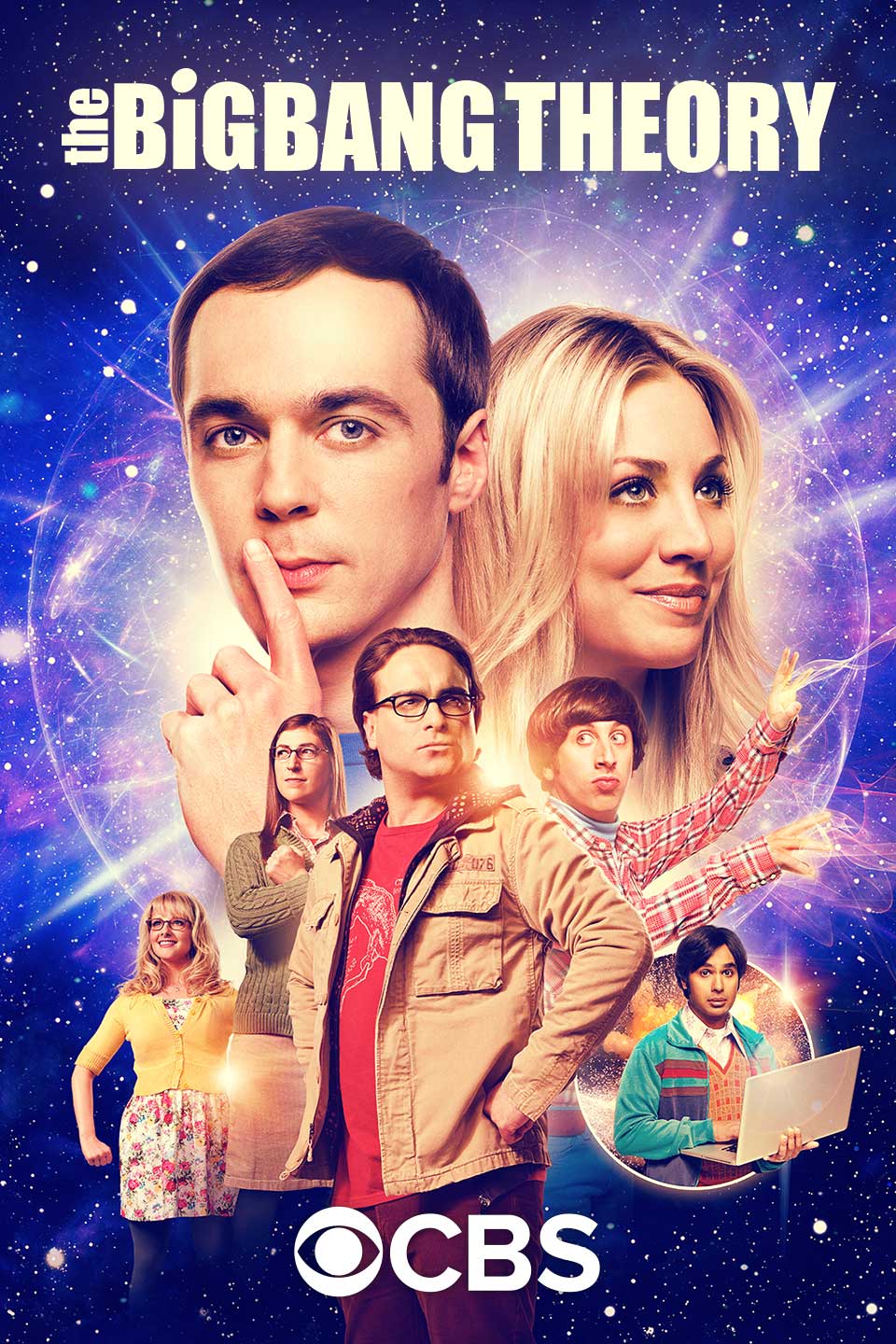
The Big Bang Theory (Season 12 & Full Series)


First of all, there's inevitably going to be spoilers in this space, but this isn't the type of show where that matters much.

The Big Bang Theory wrapped up its twelfth and final season in May of this year, and it occupied plenty of space on our DVR as a "show of last resort" that my wife and I would watch when pretty much all else failed. While not necessarily "bad", the show generally didn't have much to offer these last four seasons and we were more or less just riding it out until the end.

The major plot of Season 12 involved Sheldon and Amy gunning for a Nobel Prize for their work on "super asymmetry", and navigating the politics involved in trying to attain the award, not to mention trying to fend off a couple frauds (played by Sean Astin and Kal Penn) that kept trying to take credit for their work. They eventually win the award, with Sheldon's portion of the acceptance speech consisting of a big "thank you" for the friends that supported him all of these years, rather than the extremely long list of arrogant "I-told-you-so's" that he had planned to fling at his doubters. 

That was among the more satisfying of endings for the show's character arcs. Penny winds up pregnant and in the finale seems completely content with this, despite it not seeming like something that she fully wanted earlier in the season. It's not implausible, but that happy ending doesn't feel fully earned, as the show didn't exactly explore her feelings on the subject aside from a scene nine episodes earlier in which it's revealed that she's conflicted about her prior convictions of not wanting any children.

There isn't much in the way of resolution for the rest of the characters (except Stuart, who moves in with his new girlfriend, Denise). The series more or less just ends for Howard and Bernadette, whereas Raj breaks it off with Anu thanks to some last-minute heroics from Howard. He doesn't get much in the way of a resolution, aside from sitting next to Sarah Michelle Gellar at the Nobel Prize Ceremony. I'm disappointed that the show never really figured out what to do with Raj.

Season 12 had its moments, and the finale definitely had its high points, but The Big Bang Theory had already milked every last bit of intrigue out of these characters, so there wasn't much left to do besides sit back and enjoy the occasional witty one-liner. There's only so many times Chuck Lorre and company can expect a Sheldon "I-can't-care-about-other-people-no-wait-nevermind-yes-i-can" storyline to really resonate. Heck, even the finale was just another episode in that mold (though admittedly a stronger-than-usual one). The best that The Big Bang Theory ever had to offer was left behind almost a half-decade ago. We knew that going in, so how disappointing could this really be?

Season Grade: C+

***

The Big Bang Theory got off to a very rough start as a series, with a first season that created characters that were socially inept and hoped that its audience would get a kick out of laughing at nerds. The tone of the series measurably changed in its second season, as the viewing experience felt a lot more like hanging out with quirky people rather than poking fun at them. As the series progressed, the "nerds" began to feel more like people with dignity.

That didn't mean that all of the characters ultimately wound up compelling. Bernadette, Raj, and Leonard weren't drawn as well as the rest of the main cast, and that was a consistent black mark on the series. However, Sheldon, Penny, Amy, and Howard had lives that were fun to follow, and each evolved a great deal over the twelve seasons of the series. In particular, Jim Parsons has been showered with awards for his work as Sheldon Cooper, and he deserves every bit of it. The quality of The Big Bang Theory ebbed and flowed throughout its run, but Sheldon is one of the greatest sitcom characters ever, and this show may have not even been renewed for a second season if he didn't quickly become a breakout star in its first.

Throughout much of The Big Bang Theory's run, it has been one of the most popular scripted shows on television, and that owes just as much to its aim for broad appeal (at the expense of more complex story arcs and continuity concerns) as it does the fact that plenty of its episodes are pretty funny. There's a fair amount of basic, predictable jokes, and those that cite this as a criticism of the series are certainly not wrong. 

However, there's also a lot of good humor and heartfelt stuff mixed in, and that's missed by most who have a cursory understanding of the show. The Big Bang Theory's ubiquitousness is the main reason it's become the butt of jokes (similar to Nickelback, a band with obvious shortcomings that no one would care to joke about if it also didn't have enough appeal to have a massive following). As a result, it's the most underrated overrated show on TV. Anyone who lists The Big Bang Theory as one of their five favorite TV programs likely doesn't watch enough shows with depth or ambition. Likewise, anyone who turns up their nose and sneers at it without at least giving it a reasonable chance is missing out on the endearing charm that kept millions of people tuning in each week. 

Series Grade: B-

Monday, August 5, 2019

Deadwood (Full Series & Film)


I actually watched the first season of Deadwood several years ago, but for some reason stalled after watching the first episode of Season Two. However, with the movie coming out this year, I got re-motivated to finish off the series, and it was quite the worthwhile journey.

"Deadwood" is a town in South Dakota, and the series is set in the 1870s, prior to the territory gaining statehood. A large contingent of the characters on the show were actually real-life figures, including well-known ones like Wild Bill Hickok, "Calamity" Jane Cannary, and Wyatt Earp. Through three seasons, David Milch shows the growth of Deadwood from its infant stages to a vibrant community with inhabitants intricately tied to each other's interest and well-being.

In 1876, the righteous, hot-tempered marshal Seth Bullock (Timothy Olyphant) leaves his post in Montana to open a hardware store in Deadwood with his friend Sol Star (John Hawkes). He soon becomes entangled with Al Swearengen (Ian McShane), the proprietor of The Gem, which doubles as a bar and brothel. Though initially presented as a somewhat dangerous antagonist, Swearengen eventually becomes the series' most important character and a sort of anti-hero.

Part of what makes Swearengen endearing is that many of the other figures that either live in the camp or filter through it are downright despicable, from Cy Tolliver (the late Powers Boothe), the owner of the rival Bella Union, to perverse geologist Francis Wolcott (Garret Dillahunt), to the gold-obsessed businessman George Hearst (Gerald McRaney). Swearengen and his seedy crew seem to have just a shred more humanity in them than those they clash with, and it's enough to get you to root for them in the town's frequent conflicts (even sometimes, when the lawful Bullock is on the other side).

That's largely a testament to McShane's performance as the charismatic Swearengen, who is just a Tony Soprano away from being in the conversation for the best television character ever created. McShane steals every scene that he's a part of, and his one-liners and monologues range from powerful to hilarious. I can't say enough about the combination of the perfect voice, spot-on delivery, and superb writing that went into Al Swearengen, and it says quite a bit that I prefer him to every one of the rich characters on The Wire.

The main knock on Deadwood is its third season, as it was cancelled too soon and left many threads lingering, which made the de facto series finale something of an anticlimax. There's a plot line in Season Three involving a theater group that moves into Deadwood that proves to be thoroughly inconsequential, which is a shame considering how much screen time it received. I imagine that their presence was all a setup for the never-produced Season Four, but as it stands, the arc (if you can even call it that) was worthless; I checked out during many of those scenes and was no worse for the wear.

With such critical acclaim surrounding the series and a general understanding that the show never got the ending it deserved, HBO released Deadwood: The Movie on May 31, 2019. It was set ten years after the events of Season Three, and it was a little sad to watch just how much older all of the actors had become. In some ways, the film's conclusion felt just as disappointing as that of the full series, though that owes in part to the need to maintain historical accuracy in some respects. However, it did succeed in showing that the rough, often uncivilized mining camp had developed into a prospering, much more respectable town. As Deadwood (similar to The Wire) utilizes a large ensemble cast and aims for the town itself to be the "star" of the show, that's probably the most important ending of all.

Series Grade: A-

Film Grade: B

Thursday, July 11, 2019

Atlanta (Season One)


Aside from Deadwood, which is still a work in progress, the most recent TV show I've been watching, or at least trying to watch, is Billions, a program that couldn't be more plot-driven. Atlanta is more of my kind of show, focused on drawing interesting people and trusting that the audience will be content to just hang out with the characters without needing to push forward some sort of overarching plot. Indeed, most episodes of Atlanta involve main storylines that aren't interested in advancing the larger narrative, such as Donald Glover's protagonist Earn searching for his lost jacket or trying to get a promised payment from a club owner.

Earn is essentially broke and aspires to fix that problem by becoming the manager of his rapper cousin, Paper Boi (Brian Tyree Henry). He's also in a complicated relationship with a woman, Van, (Zazie Beets), with whom he has a daughter. Van has her life together much more so than Earn, and it's clear that Van is the one feeling the pressure to be responsible and a provider. The two are on speaking terms it seems primarily due to the need to care for their child, but Van is openly seeing other people. There's an episode focusing entirely on Van and her worldview, and it's one of the season's better installments.

There's not much of an over-arching storyline in Season One besides Earn's struggle to elevate his financial status (his moniker is not a coincidence) and make his own way, rather than being overly dependent on those around him. He's a mostly likable character whom you want to root for, but he's also quite brooding and weird. Then again, the strange and often surreal circumstances he faces make Earn something of a product of his surroundings.

Paper Boi is also a fascinating character, who seems standoffish and not willing to trust anyone except his obtuse sidekick Darius (a hilarious LaKeith Stanfield). His classically tough exterior begins to come down a little bit in the second episode, when he witnesses children pretending to be him when shooting each other with toy guns (note: not a spoiler, the opening scene of the series involves Paper Boi shooting someone). It reminded me a little bit of a young(er) Kenard pretending to be Omar in The Wire. Paper Boi's visibly bothered by the experience, and the rest of the season focuses a great deal on how scrutiny over his actions increases as he gains fame.

While there's a great deal of realism in Atlanta, the show takes a few trips into the absurd. In one episode, Paper Boi gets into a celebrity basketball game with a black version of Justin Bieber, and is forced to confront the different expectations society places on pop singers and rappers. In another, Paper Boi appears on a talk show called Montague, airing on an alternate-universe version of B.E.T. I'm not sure I've laughed more at a television episode in a long time, between the fake and often absurd commercials ("The price is on the can, though"), to Paper Boi delivering well-timed retorts when questioned about his insensitivity to certain social issues. Brian Tyree Henry plays the "does-not-give-a-shit" card extremely well, and while the scenes could have had problematic implications on other shows, it's clear that Atlanta as a whole isn't using Paper Boi as a mouthpiece; the show's views are primarily grounded in Earn's rather direct social commentary.

I'm not currently able to watch the second season of Atlanta, as it requires an FX+ subscription. I hope to be able to watch Season Two at some point down the road and see where Glover and company decide to take this show next. It's a show bursting with creativity and a very worthwhile experience.

Bullet Points:

  • Steve Urkel sighting! Jaleel White guest stars in the celebrity basketball game episode (fans of Family Matters will remember that Urkel was quite the ballhandler). I have to say, though, the actual basketball action in the episode was very bad, and while I admire the episode's commitment to not using stunt doubles, the difference between what it looked like and what the editing was trying to make it look like was very evident.
  • The actual hip-hop group Migos makes an appearance as drug dealers. I didn't know it was them until reading reviews.

Episode Grades:

  1. "The Big Bang": A-
  2. "Streets on Lock": A-
  3. "Go for Broke": B+
  4. "The Streisand Effect": B
  5. "Nobody Beats the Biebs": B-
  6. "Value": A
  7. "B.A.N.": A
  8. "The Club": B+
  9. "Juneteenth": B
  10. "The Jacket": A-
Season Grade: A-

Wednesday, June 26, 2019

Game of Thrones, Season 8


This is another one of those reviews that I'm purely doing for completionist reasons. Everything that could possibly have been said about this show -- and particularly this season of this show -- has already been said. Furthermore, I'm not a major GoT expert. I read like 75% of the first book, saw the pilot episode, and drifted in and out of the plot line as my wife has watched it over the course of the decade. I watched Season 7 and Season 8 in full, and while I might not have the depth of the background that everyone else had, I knew enough about the key plot points and characters prior to Season 7 such that I was not hopelessly lost.

The prevailing opinion seems to be that Season 8 was disappointing. I found it to be fairly entertaining. The standout episode was "A Knight of the Seven Kingdoms", which featured the knighting of Brienne and all of the build-up before the Battle of Winterfell. The Battle of Winterfell was very confusing due to the weird choice to make everything extremely hard to see (exception: I thought the scene with the Dothraki torches being extinguished one by one off in the distance was pretty cool).

A lot of people were mad about Dany's heel turn, but it seemed like this was foreshadowed pretty well throughout the series and rooted in what we know about her character. She's had plenty of moments of kindness before, but she's been all about power from the jump, and her lean into the "tyrant" mindset wasn't all that shocking.

The final episode did a good enough job. It's impossible to tie up all of the many remaining threads in a way that satisfies everybody. I thought Drogon burning the Iron Throne was one of the weirdest scenes of the series. The decision to make Bran the new king was shocking to everyone except Las Vegas bookies, who apparently had that one nailed from the jump. Bran was such a weird goober for the entirety of the last two seasons and I didn't like much of anything they did with him (particularly given that his powers were basically useless at the Battle of Winterfell).

Tyrion's whole deal for most of the series is that he's smarter than everyone else, but the show's writers fashioned him into an idiot who couldn't see two steps ahead down the stretch, which was really odd. The show tied up Arya and Sansa's arcs pretty well, and Arya's story in particular in this final season was a strong point.

Another thing that I thought was strange was that Euron Greyjoy's fleet was so dominant against two dragons with support in one episode and then completely helpless against a single dragon the next. They didn't do a good job of making it clear why Dany was so much more successful the second time around.

Anyway, those are my scattered thoughts. They're even less coherent than usual because I know I'm not going to match the same passion for this show as the superfans and again, this season's been beat to death all over the place (plus, I'm getting around to writing this over a month late).

Season Grade: B