Monday, May 14, 2018

Barry (Season One)


For everyone who got here just after finishing this inaugural season of Barry....holy shit.

And for everyone else, um, welcome, I guess?

Unlike some of the other stuff I've been watching lately, Barry is a relatively easy show to explain. The main character, Barry Berkman (Bill Hader), is an ex-marine who became a hitman after his service, often applying a Boondocks Saints-like moral code to justify what he does; the people he kills are generally bad. His boss, Fuches, is friendly/chummy enough with Barry but there isn't a lot of regard for Barry's well-being there. One day, Barry's job leads him to an acting class led by Gene Cousineau (Henry Winkler). Attracted by the normalcy of it all, the camaraderie of the other people in the class, the chance to have a real hobby outside of his grim job, and to one of the other students, Sally Reed (Sarah Goldberg), Barry winds up taking the class. It becomes a bright spot for his otherwise bleak existence, but obviously, the difficulties of living a double life manifest themselves, and Barry spends most of the season staving off either getting caught or killed.

Despite the high stakes, Barry is a dark comedy, and most of the episodes pack plenty of laughs in addition to big dramatic moments. You'd typically think that the Chechen mob bosses that Barry becomes involved with would make for frightening individuals (and make no mistake about it, they mean business), but Goran (Glenn Fleshler) and Noho Hank (Anthony Carrigan) provide consistent comic relief. Noho Hank is small and polite to a fault, while Goran is built like your typical hulking thug. The show gets a lot of comedy out of Goran having a normal-ish family life outside of his mob dealings, sort of like a Chechen Tony Soprano (in a nice choice of props, there's a red Cozy Coupe with goofy eyes sitting in his garage, just lurking in the background while extreme violence and murder plots take place).

The show also plays plenty of attention to Gene's personal life, including his romantic pursuit of Detective Moss (Paula Newsome), who also happens to be investigating murders to which Barry is connected. Sally gets plenty of screen time too, as her efforts to land acting gigs are thwarted by both her mediocre (at times) ability, and more painfully, Weinstein-like characters that serve as gatekeepers to important roles. If there's one thing I have to pick on with this season, it's that there's a point in the Barry/Sally storyline where her personality and attitude toward Barry seem to shift without cause. Barry's left pretty confused by the sudden change, and as the audience, we feel that confusion as well. That'd be perfectly fine had we not spent so much time getting to know Sally independent of Barry. Because we're somewhat accustomed to seeing scenes from Sally's point of view, the abrupt character change without explanation leaves something to be desired.

Barry takes a bit to find its footing, and any minor sins from the somewhat uneven early episodes are compensated for by the action and hilarity in the last four. The season's falling action is a speed rap of plot developments, all of which are given the appropriate dramatic weight and some of which will leave you gaping open-mouthed. Anchoring all of this is the fantastic performance of Hader, who absolutely disappears into the role and captures a huge array of emotions from the vacant, dead countenance he often wears early in the season to the horror, anguish, and occasional happiness he shows later on.

I feel like I'm giving out very high grades for most things I've been checking out this year, but bear in mind that for me to actually watch a show to completion and feel compelled to write about it, there's probably a bias toward things I like a lot. I don't consider myself to be a 'soft' critic of TV, it's just that I'm on a big streak of watching pretty good stuff.

Season One Grade: A-

Wednesday, April 25, 2018

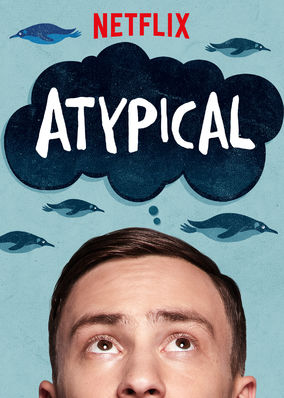
Atypical (Season One)


Continuing the high school drama kick I'm apparently on, I checked out Atypical on Netflix, which is about an high school student named Sam -- who is on the autism spectrum -- and his family. I have very positive things to say about the show, but before I do, I feel like I need to discuss something.

After watching the show, I decided to check out some reviews online, one of which was rather scathing (and judging by the comments, the author was not alone). That review came from someone who identified themself as being on the spectrum (a very useful perspective for a show like this, to be sure) and was disappointed by the characterization of Sam. In particular they felt that Sam was portrayed as an exaggerated and stereotypical caricature who misses social cues far more often than is realistic and whose "utter lack of tact is jarring". From this perspective, I could understand why Atypical's portrayal of Sam could be seen as damaging, as people on the autism spectrum are under-represented in television and characters who are written like someone on the spectrum may not be identified as such (thinking specifically of Sheldon Cooper from The Big Bang Theory). While watching the show, I did not process Sam as being representative of people on the autism spectrum in general and just thought of Sam as representative of Sam, a person with a condition that affects different people in unique ways. That's the direction from which I am reviewing Atypical, but I wanted to acknowledge the other viewpoint above because I feel it is important.

*****

Atypical is nominally the story of Sam Gardner (Keir Gilchrist), but it quickly becomes clear that the show is just as much about his younger sister Casey (Brigette Lundy-Paine), his mother Elsa (Jennifer Jason Leigh*), and his father Doug (Michael Rapaport). Despite spending a considerable amount of time with Sam's parents, it's a high school show, and one that runs afoul of my biggest pet peeve about high school shows: inappropriately aged actors. At the time of release, Gilchrist, Lundy-Paine, and Jenna Boyd (who plays Paige, one of Sam's potential love interests), were all 24 years old. This does a disservice to the realism** of the genre.

*I know Jennifer Jason Leigh from two things -- this show and Fast Times at Ridgemont High. I am therefore only aware of her existence at two ages, 20 and 55. I feel like I am trying to see Stacy Hamilton in her face every time I watch her on this show and it's super difficult.

**In one accidentally hilarious scene, one of the over-aged high school kids tries to order a drink at a bar, only to be told, "You're clearly not 21".

That complaint aside, nearly every arc and character on this show are great, and Atypcial builds them all into fully realized characters who behave in believable ways (with one exception, which I'll get to). The principal storyline of the season is Sam's attempting to enter the dating world, which is difficult enough for anyone but is even tougher for him given his condition. He tries to work through his issues with his therapist, Julia (whom the show smartly fleshes out beyond just her interactions with Sam), and many of the dating ideas he tries out are built from their sessions together. Gilchrist's performance in the role is excellent and Sam winds up coming off likable despite some of the things he does, because you can tell he's well meaning and just trying to figure out the "rules" of something unfamiliar to him.

As fun as it is to watch Sam, his sister Casey is the show's strongest character and has the most to deal with. She's a track star who's navigating her relationship with her first boyfriend, Evan (Graham Rogers), trying to do what's best for her future track career, dealing with extreme peer pressure from her friends and coach, dealing with pretty substantial issues with each of her parents (we're not talking about typical teenage bullshit here, either), struggling with the ways that Sam's condition has altered her upbringing and family life, all while serving as Sam's de facto guardian through the harsh social waters of high school (when she's not semi-lovingly pushing him around and making fun of him herself). Casey can be very cold and biting, and usually she has a pretty good motivation for it. I think the show strikes the perfect balance between Casey's righteous rage and moments of unnecessary teenage jerkiness, making her someone who's easy to like, yet grounded in reality.

Elsa and Doug are also given quite a bit to do as the parents of these two. For years, Elsa has taken upon herself to responsibly (yet aggressively) manage Sam's autism. She attends support meetings with other parents and has a deep understanding of Sam's condition and what he goes through. She's essentially the primary caregiver, but feels stuck given that it can often be an unrewarding job (and the litany of shit thrown her way by Casey makes it all the more difficult). Her loyalty to her family and role begins being significantly tested before the curtain closes on the first episode. Doug is coming from a different place, as he's been historically uninvolved with Sam, but with Sam's newfound interest in dating, he sees a second chance to connect with his son.

The non-Gardners on the show are generally quality characters as well. Sam's friend and co-worker Zahid is something of a womanizing bonehead, but he's good for comic relief and the way he's invested in Sam's problems is legitimately endearing. Casey's boyfriend Evan has his moments as well and seems pretty relatable, especially given the situations he gets put into by Casey and the rest of the Gardners. The one character on the show that doesn't really work is Paige, who is interested in Sam but we know so little about her that it's not really clear why. Sam isn't particularly nice to her and she's openly condescending about Sam's most prominent interest (Antarctica). It would work better if Paige's affection for Sam was a little more well-developed, because as far as we can tell, she either 1) thinks he's really hot, or 2) just wants someone to label as her boyfriend. Neither of those would provide the required weight for her apparent emotional investment. Then again, I guess teenagers are goofy.

Little problems aside, Atypical has a stellar plot that seamlessly weaves in twists that pack some major highs and emotional gut-punches. This is in stark contrast to a show like, say, This Is Us, which drops random, occasionally nonsensical bombs out of nowhere just to try to give you all the feels. In Atpyical, every place the story goes seems logical and works well within the universe that the show has created for itself. With just eight half-hour episodes, the show doesn't try to do too much and spends just the right amount of time playing out each arc. It's an addictive watch that sucks you into its world and compels you to root for its characters (a happy Casey is just as satisfying as a happy Kate from Everything Sucks!). It does all of this while offering a unique perspective on our world that isn't commonly seen on television (Sam's voice-over narration is a great feature). I've seen some pretty great TV so far in 2018, and Atypical is likely to wind up near the top of the list.

Season One Grade: A


Monday, April 9, 2018

The Good Place (Seasons One and Two)


I may have wrapped up Cheers, but I wasn't ready to say good-bye to Ted Danson yet, so I decided I wanted to move on to either Fargo or The Good Place. When I discovered that there is no way to watch Fargo except on Hulu, the decision was made for me and I settled on Michael Schur's NBC comedy.

I'm going to try to go through this without spoilers, which will be difficult as there's no shortage of plot twists along the way, which vary greatly in both intrigue and predictability.

Particularly given that it's in the comedy genre, The Good Place gets extremely high marks for innovation, as the premise is unlike any I've seen before. In the premiere, Eleanor Shellstrop (Kristen Bell) steps into the office of someone named Michael (Danson). Eleanor learns from Michael that she has died and that the afterlife consists of a "Good Place" and a "Bad Place", and that she has wound up in the "Good Place". The system of how the afterlife works is revealed to not be in accordance with any particular religion (according to Michael, each religion only gets it about 5% right or less, but some stoned guy in Canada figured it out with 92% accuracy). Essentially, every action done by a person earns them either positive or negative points, and only the people with the very highest positive scores at the end of their life make it into the Good Place. Some of the best gags on the show include Michael bringing up screens of significant point-earning actions, such as:

  • ATE VEGAN: +425.94
  • NEVER DISCUSSED VEGANISM UNPROMPTED: +9,875.37
  • FAIL TO DISCLOSE CAMEL ILLNESS WHEN SELLING CAMEL: -22.22
  • ROOT FOR NEW YORK YANKEES: -99.15 (Schur is a huge Red Sox fan)

The central problem? Later in the pilot episode, Eleanor realizes that they took the wrong person and that she's in the Good Place by mistake. Realizing that she's a less-than-worthy person in a utopian world, she decides to take lessons from her assigned soulmate Chidi (William Jackson Harper), who was an ethics professor in life. Her hope is that she can pass as enough of a good person to survive in the Good Place without being found out as a fraud.

Eleanor and Chidi shortly meet a socialite named Tahani (Jameela Jamil) and a silent Buddhist monk named Jianyu (Manny Jacinto) and the story eventually becomes just as much about each of the other three major players as it is about Eleanor. All of them have unique challenges in adjusting to the new afterlife in the neighborhood that Michael has created for them. Furthermore, things begin to go awry within the fabric of the neighborhood when Eleanor engages in selfish behavior inconsistent with that expected of citizens of the Good Place.

The show effectively utilizes flashbacks to each of these four peoples' lives, and these add a lot of color to what each is all about. Citizens of the Good Place are served by some sort of computerized being called Janet (D'Arcy Carden), who repeatedly insists that she is neither a woman nor a robot. Despite not initially appearing to be a being with human emotion, Janet is developed into someone with almost as much personality as the rest of the gang, and her popping in and startling characters with her trademark, "Hi there" is a wonderful running gag.

The acting in the show is superb -- especially for a comedy. Danson is obviously great, as he might be the greatest sitcom actor of all time. The way Michael reacts with glee to unfamiliar human objects and conventions is delightful. Plus, there's a scene in which he tends bar! If seeing Ted Danson behind a bar doesn't give you all the feels, you've....never seen Cheers, I guess. Still, despite Danson's excellence, Kristen Bell's performance is the best; she slips perfectly into her Eleanor character and captures all the right emotions and quirks of a sorta crappy person trying her damnedest to care about other people and the underlying ethics of the things she does. I found myself saying aloud, "She's so good" many times during our viewing, usually in-between the excellent laughs that the show delivers.

This is pretty bare-bones, as it's really hard to talk at length about The Good Place without this getting spoileriffic. This is the rare comedy that makes you care just as much about the plot as getting a good laugh. I guess that makes sense, given that the stakes for the characters often involve eternal damnation. The ethical dilemmas presented on the show are consistently interesting to think about and really make you ponder both our life and the afterlife at a level deeper than you'd ever think from a network sitcom. It manages to carry that weight despite being consistently funny and charming. You can watch Season One on Netflix and Season Two on NBC's website. I don't know what you're waiting for.

Seasons One & Two Grade: A-

Tuesday, March 20, 2018

Cheers (Full Series)


I started watching Cheers sometime in November and have finished it with about a week to go before White Sox opening day, so it was a pretty effective way to nuke the offseason. Cheers is 11 seasons and 275 episodes long. Not counting re-watches (which would make The Wire king), I have now spent more time watching Cheers than any other show in history. At about 105 hours, that's going to be a difficult record to top.

And oh, what a journey it has been. I reviewed the first four seasons of Cheers here, as part of my year-end 2017 television review. The most remarkable thing about Cheers is how consistent the show really was. I largely expected a drop-off in the later seasons, but it never came. There were clunky episodes scattered throughout the series (for instance, I would not recommend the Season Ten episode "Madame LaCarla", in which Carla takes over for her psychic), but they were isolated problems. The comedy stayed fresh. It was funny even when it was predictable. You could anticipate many of Carla's disparaging one-liners or minor plot developments and they'd still be great because of how the actors delivered them.

Ted Danson (portraying Sam Malone) is particularly outstanding in that regard, especially the way that he reacts so resigned and calm when dealing with difficult and/or offensive people*. When Rebecca's father comes to town to try to bring her back to San Diego in Season 11, he reprimands Sam upon meeting him for trying to have a baby with Rebecca even though they aren't married. Later, Sam tries to convince him to let Rebecca stay...
Sam: (approaching Rebecca's father) "Excuse me for a minute, sir. You know, if you don't mind me saying so, I-I don't think you're being fair. You can't ask her to pack up and go just 'cause you don't think she made it." 
Rebecca's father: "Was it that kind of persuasive arguing that got my daughter into trying to conceive your bastard child?" 
Sam: (turning away, accepting defeat) "Boy, you-you really just can't see your way past that, can you?"
*The exception is John Hill, the late-seasons' owner of Melville's, the restaurant upstairs, who seems to be the one person who can get under Sam's skin and drive him insane. Over time, John Hill's introductory trademark "Saaaaaaammmmm" became just as entertaining a gimmick as the bar yelling "Norm!" upon the barfly's entry. Final comment: John Hill getting left out of the finale is a damn crime.

The later seasons of Cheers are packed with tons of excellent moments. The annual "Bar Wars" episodes, which pitted Cheers against Gary's Olde Town Tavern in a never-ending prank war, were consistent highlights. The final episode of that subseries featured the return of con-artist Harry the Hat, my favorite (okay, maybe second to old Al) minor character from the early seasons. Then there's know-it-all blowhard mailman Cliff going on Jeopardy! and almost winning due to an assortment of favorable categories, then screwing it up on Final Jeopardy due to some combination of a poorly-worded question and his own incompetence. The two-part Season 10 finale featuring Woody's wedding was a blitz of fast-and-furious gags as the gang desperately tried to fix the many calamities (both self-induced and not) that all aligned perfectly with Carla's superstitious premonition that the day would be a disaster. I don't know that I've ever laughed harder at a sitcom episode.

At its best, Cheers could be more than just a comedy. The Season Five finale, in which Diane leaves Cheers (allegedly for six months) to pursue a writing career was punctuated by Sam saying aloud to himself with an air of acceptance, "Have a nice life." That's a moment that hits home after watching their relationship progress for five years. Despite Carla's repeated jabs at the other members at the bar, she has a lot of genuinely tender moments with Sam that make for one of the greatest platonic opposite-sex friendships ever seen on television.

And then there's the series finale, which is one of the greatest episodes of TV I've ever watched, and certainly a contender for best finale of all time. There's been mild spoilers in this post to this point, but I really don't want to ruin the finale for anyone who hasn't seen it, so I'm typing out my comments on the finale in black text below, so highlight it if you want to read it.

CHEERS FINALE:

Sam had been struggling with his place in the world for some time, even going to a sex addiction therapy session to try to get past his obsession with chasing women that, in his mind, has been inhibiting  his ability to find true happiness. He thinks he needs a wife and considers Rebecca as something of a backup, but his words show that this isn't what he truly wants.

And then, Diane returns to Cheers. Sam, confronted by his own loneliness, decides to reboot that relationship and leave Cheers forever to be with Diane. When the bar's patrons (in part fearing the loss of their ringleader) point out that this is an awful idea, he calls them all out for their own stagnation, their dependence on the bar and himself, and how they never progress forward in life.

"You know, you should need more than this! I am not your mother! This is not your home! This is ridiculous."
Sam eventually comes to his senses and returns to Cheers, wanting to smoke a celebratory Cuban cigar with his friends. However, one by one, his friends leave him, citing an excuse ("it's getting late", "gotta get home to Vera", "I have kids", etc.) that never seems to otherwise be enough to get these people to leave the bar. As Sam stands there, dejected, all of them open the door and come back, joking that they were tipped off by Diane and decided to have some fun with Sam.

The group sits around in a circle, discussing the meaning of life and appreciating the little family they've created for themselves over the years at Sam's humble bar. The phone rings and each of them worries that the caller is one of their family members. Frasier somewhat profoundly says,

"Say, you know what, wait, don't answer it. Just let whoever it is think that we're on our way."
The group leaves the bar, but perpetual barfly Norm stays behind to deliver one of his rare-but-powerful serious moments in the series. 
Norm: Sammy, I didn't want to say this in front of the others, but you know what I think the most important thing in life is? It's love. You want to know what I love?  
Sam: Beer, Norm?  
Norm: Yeah, I'll have a quick one. 
... 
Norm: I don't think it matters what you love, Sammy. Could be a person, could be a thing. As long as you love it totally, completely, without judgment.
.... 
Norm: Well, I'm off. But, um, Sammy, can I let you in on a little secret? 
Sam: Sure. 
Norm: I knew you'd come back. 
Sam: You did?  
Norm: You can never be unfaithful to your one true love. You always come back to her. 
Sam: Who is that?  
Norm: Think about it, Sam. (::taps on the door, and leaves::)
Sam is left alone to look around his bar. He smiles and chuckles to himself.
"Boy, I'll tell you I'm the luckiest son of a bitch on Earth."
Then, Sam runs his hand along the bar and taps on it, casually walking around, much like he did in the pilot episode. A prospective customer knocks on the door, and Sam utters the last line of the series:
"Sorry, we're closed."
He walks over to the picture of Geronimo on the wall and straightens it (in a sign of respect for the late Nicholas Colasanto), and walks down the back hall, going full circle back to the pilot's opening scene before the cut to black.

Cheers is very clearly divided into the Diane years and the Rebecca years. I'm asked a lot which I prefer. I think that the quality of the show is about even through its two "halves" (sort of a misnomer, as there's a lot more Rebecca episodes), but that Rebecca is a better character than Diane. I sort of have issues with both, though. Diane often felt as jarring to me as she must have to the folks at Cheers and she was arguably downright evil in the later stages of Season Five. Rebecca didn't have a consistent personality throughout the years (compare strong-willed and composed Season Six Rebecca to the mess that she was at the end of the series) and whose flaws could be difficult to watch, but she was ultimately more interesting. That being said, Shelley Long was a much better actress than Kirstie Alley. Long was written as an irritating character, but she could sell emotion and comedy much better than Alley. For most of the second half of the series, I had to cringe whenever Rebecca "cried", because Alley was horrible at cry-acting and she was asked to do it a LOT. Still, Alley's voice had a good amount of bite to it and she was better for sarcastic humor.

Ultimately, Cheers is a show about several running themes. One of them is aging. Some of the strongest episodes of the series focus on Sam's acceptance that he's no longer the ladies' man he was in his early thirties and how his perspective continues to change over the course of the series as he gets older. Second, there's family. We get snippets of the core cast's family lives (most notably with Frasier, Lilith, and their son, Frederick, but also with Carla's kids, Cliff's mom, and Norm's nonexistent relationship with Vera), but it's clear based on where these characters choose to spend their time (particularly on the holidays) that they consider each other to be their true family.


Third, and most debatably, the show deals with self-acceptance. This is by and large a group of losers. Sam's an alcoholic who washed out of baseball and isn't notably good at anything besides attracting cheap women (and even that fades). Diane's so out of touch with non-intellectuals and normalcy that her presence is obnoxious and grating. Norm's a beer-swilling slacker who bounces from job to job and is perpetually content with the thought that his life is going nowhere. Cliff has no sense of self-awareness, is too unappealing to attract women, lives with his mother, and repeatedly over-inflates the importance of his humdrum career with the postal service. Carla is raising eight (mostly) degenerate kids as a (mostly) single mother on a waitress' salary due to a series of failed relationships. Woody's a farm kid in the big city whose slow wit puts him on a different wavelength than everyone else. Coach is an older version of Woody. Frasier's a pompous ass whose credentials don't translate to effective psychiatric work and whose sense of superiority over the other Cheers patrons is very clearly rooted in nothing. Rebecca fails at basically everything she does (which, as Carla is quick to remind you, is very little).


These people are content to never change year-in and year-out. You get the sense that they're no worse for the wear. Carla's content with being a mean-spirited person who doesn't let her considerable fertility affect her behavior with men. Norm's happy never doing anything productive or being a worthwhile spouse to Vera. Cliff won't cut the cord with his mom or accept criticisms about his irritating personality. Frasier won't get off his high horse, and so forth. Yet, we wind up loving them all exactly the way they are. Their stagnation isn't frustrating to watch; it's practically endearing. It's all part of the sense of the comfort the show creates. Both our world and that of the characters of Cheers keep changing, but this band of misfits and rejects stays the same. 


In that sense, watching Cheers becomes a lot like what being at Cheers must feel like to Sam and the gang; it's retreating to a place that's familiar, pleasant, and filled with people you feel like you've known forever. That's basically what the famous Cheers opening theme is all about, and all it takes are those few opening piano notes to slip into that wonderful state of mind. I'm going to miss my almost-daily trips to this fictional place, and the only thing that isn't sad about this journey being over is the knowledge that I've now fully experienced the greatest live-action sitcom of all time.


Series Grade: A

Thursday, March 8, 2018

Everything Sucks! (Season One)

Cheers is taking a damn long time to finish, but I'm finally in the last season. Despite occasionally tiring of that being the primary show to watch in my spare time for the past 4-5 months, I'm definitely going to miss it when its gone. That said, I have been eager to check out something new for quite some time, and I had a chance to do just that earlier this week, so I dove into a new Netflix series, Everything Sucks!

The basics: Everything Sucks! is a high school dramedy that is set in the mid-90's and is jam-packed with nostalgia. Between all the references to technology, doodads, lingo, and the AWESOME soundtrack, the show makes sure to never let you forget what decade it is. It deals with some common themes (peer pressure, parental-teenager relationships, and cliques), and tackles others in a less-conventional (for TV) way (faculty-student interactions and [unrelated] sexuality). The setting is the town of "Boring, Oregon", which is something of an ironic running joke.

Truth be told, I haven't seen too many high school shows that didn't feature a laugh track. The Wonder Years and Malcolm in the Middle sort of qualify, but they were both arguably at their best when their main characters were in middle school. Glee suffered from getting progressively more ridiculous as time went on and also from using actors that would have had to flunk for about a decade to be considered "high schoolers". That last bit also applies to Friday Night Lights, but that show was so superb that the use of inappropriately-aged actors was but a minor distraction. Finally, there's Freaks and Geeks, which many consider to be the gold standard for high school shows. I guess you might say that I'm no connoisseur of the genre, particularly since I have not seen many of the critically-acclaimed shows such as Buffy the Vampire Slayer or My So-Called Life.

Still, Freaks and Geeks has a lot in common with Everything Sucks!, and I think that many will find the two shows comparable on plenty of levels. Both shows are set in a time period decades prior to their production. Both do a far better job of utilizing actors that look like they could actually pass for  high school kids, which is actually a pretty damn big deal when you're trying to draw characters that seem relatable. And finally, both of them are excellent at cutting to the core of the adolescent psyche and showing reactions to life's problems (both the exaggerated kind and the serious kind) in a way that's completely understandable to someone who has moved on from that particularly confusing stage of life.

Everything Sucks! has two fantastic characters leading its ensemble in Jahi Winston's Luke and Peyton Kennedy's Kate. Luke is about as independent as a well-adjusted teenage kid can be; his dad ran out when he was seven and his mom is a flight attendant who's frequently away for days at a time (I particularly enjoyed Luke's joke about using a fake mustache to trick child protective services). Despite his confidence and proficiency at "adulting" that would be the envy of many a 24-year-old, Luke is still a 14-year-old kid, prone to letting the emotions of difficult situations get in the way of his better judgment and blind him to the way his actions affect others.

Luke joins the AV Club in his second week of school and meets Kate, to whom he immediately takes a liking. Kate is generally reserved and somewhat uncomfortable with attention, in part because she's the principal's daughter. Kennedy's the best of all the actors on the show, and her brooding, often cold mannerisms make for outstanding (and often heart-warming) moments when Kate smiles, laughs, or shows any sort of animation.

Luke's best friends are Tyler and McQuaid, whom at first seemed like surface-level replicas of Freaks and Geeks' Neal and Bill before the show developed a sense of what to do with them. The primary plot line of the season involves Kate, Luke, McQuaid and Tyler joining forces with the drama club (who are interestingly painted as the "cool kids" for the first few episodes before the show begins to essentially ignore high school's social pecking order) to create a movie. The lead actors of the drama club, Oliver and Emaline, reveal themselves to be more than just the stuck-up jerks they were at first and even develop surprising relationships with Tyler and McQuaid.

The principal, Ken, is also given a pretty interesting role and the show explores the complications involved with being both Kate's father and an authority figure at the school. Ken's wife has been dead for years and he's initially (okay, perpetually) painted as a dweeby dude whose lameness holds him back until by chance he gets another shot at love, and much of the season is spent watching him fight for that genuine feeling of happiness to match his oft-artificial cheery disposition.

The show is an incredibly quick watch; Season One has ten 23-minute episodes and you could cruise through the whole thing in the time it takes a playoff baseball game to reach the 8th inning (zing). I'm not much of a binge watcher (I start to get antsy after watching two consecutive episodes of almost any show), but Everything Sucks! was addictive (and digestible) enough to regularly disrupt my regular Cheers-watching schedule. The show is compelling enough for the first few episodes before it finds itself and the back half was too much fun for me to go to bed and save it for the next day. There's no shortage of show recommendations being hurled at people these days, so sorry for adding one to the list.

Season Grade: A-

Monday, January 29, 2018

Television Review - 2017 (Part 6): #1 Viewing Experience of 2017, The Sopranos (Seasons 2-6)

That other television shows had to compete with five seasons of The Sopranos in these rankings really isn't fair. I don't know of anyone who's seen the full run of the show and doesn't consider it one of their top ten or so favorite shows ever, and most critics believe it to be one of the best five or so shows to ever hit the air. Many even have it as THE best show, which I'd disagree with, but not fervently so.

Watching The Sopranos for the first time in 2016-17 means that I went into it with all the hype that a TV show could possibly have. I recapped Season Two here, Season Three here, and Season Four here, before completely running out of steam. I had a little bit on Season Five, in which I did nothing more than wax poetic about Steve Buscemi's performance as Tony Blundetto, but it never went to publication. In any event, the last two seasons of The Sopranos were fantastic.

I've read a lot of debate online about the ranking of the six seasons of The Sopranos, so I'll toss my thoughts out there.

SPOILERS ABOUND!!!!!!!

1) Season Five

Season Five had the aforementioned Tony B. arc and tensions between Christopher and Tony over Adriana, who was herself battling her situation as an FBI informant throughout. With a show this consistently great, it's hard to choose one season that stood out above the rest, but I'll give the edge to Season Five's cohesive storyline, much of which is satisfyingly wrapped up by the final episode. It's also about when you can become certain that there's no redemption for any of these characters. At the beginning of the series, Tony is someone who can be occasionally influenced by Dr. Melfi, Carmela, or his own conscience to do the right thing ("right" is always relative on The Sopranos). Season Five is when it becomes clear that there will be no saving Tony Soprano -- a realization Melfi speaks out loud in Season Six. Similarly, Christopher goes back on drugs, Carmela goes back to Tony, and everyone's doomed to be stuck in their ways. A major theme of the series is these characters' inability to change for the better, despite their circumstances repeatedly demanding it.

2) Season Three

Season Three had "Pine Barrens" (the one where Paulie and Christopher are lost in the freezing woods), which for my money is one of the best few episodes of the series, and certainly the most memorable. It also introduced Ralphie, who provided strong villain material for much of the season, and had the episode "Employee of the Month", which presented an extreme test of Dr. Melfi's moral compass. Had it not been for the Jackie Jr. storyline, Season Three would be practically flawless.

3) Season One

A couple of the highlights here are the excellent "College" episode and "I Dream of Jeannie Cusamano". Though it doesn't have the depth of some of the later seasons, the story was engrossing enough that I knew I'd be able to plow through the remaining 73 hours of television with ease. Tony's college trip with Meadow, in which he makes it his mission to track down and kill an FBI informant while showing his daughter around Colby College, is one of the top-rated episodes of The Sopranos and establishes the difficulty of the double-life that Tony leads. It was also enjoyable to watch Tony before he lost pretty much all sense of morality.

4) Season Six

Season Six starts out somewhat slowly, with Tony being in a coma, Christopher developing his movie, and Vito on the run from his past life, but the back half of the season makes it all worth it. The series' final nine episodes include "Soprano Home Movies", an excellent hour in which the Tony, Carmela, Bobby, and Janice adjourn to a lake house, with amusing conflicts. The violent mob war between Phil Leotardo and the DiMeo family comes to its bloody conclusion, a couple of beloved characters meet their tragic demise, and Dr. Melfi finally realizes the uselessness in treating Tony. Then there's the ending of the series finale; I think I should expla

5) Season Two

Season Two earned an "A-" grade from me, so ranking it fifth is no insult. I especially enjoyed the Pussy storyline that ran through most of the season and Christopher's foray into the movie business was still a novelty, so I enjoyed it a little more here than I did later in the series. However, there were a couple weird plot devices used (the airline tickets turned out to be much ado about nothing), Silvio and Paulie had yet to be well-developed characters, and there was way too much Janice, who is terrible.

6) Season Four

The season-ending breakup between Carmela and Tony was a long time coming and made for some excellent viewing. I also liked the added focus on Bobby Bacala, who was consistently one of my favorite characters. However, the Carmela/Furio storyline was problematic from the start and had an anticlimactic ending. Similarly, Artie's get-cash-quick scheme was uncomfortable to watch just because it was pretty obvious how it would end. This was a weird season that certainly had its moments despite a couple of weak storylines. I still gave it a B+; this show is still really good even at its worst.

Tuesday, January 9, 2018

Television Review - 2017 (Part 5): #2 Viewing Experience of 2017, Better Call Saul

There's spoilers here, so stop if you don't want anything ruined.

After a third season, my opinion is unchanged. Better Call Saul is the best active show that I watch on TV.

Given that the same man is behind it, it's no wonder that Saul is able to replicate the tension that we saw on Breaking Bad, and I'm wondering whether there will be legitimate debates at the end of the series as to which show is better. Unfortunately for Saul, they just killed off one of the best aspects of the show in Chuck McGill.

Chuck sort of had to vacate the show, having exhausted any sort of useful relationship with Jimmy and having been ousted from the firm that sees his condition as a detriment to its business. His story was largely complete, but the loss will still be felt. Characters as well-written as Chuck are hard to find on television, even among very good shows. He felt real, yet transparent enough for viewers to understand exactly how events, circumstances, and other characters' words would affect him. Michael McKean (who absolutely owned his character) was often able to transmit Chuck's reactions to things with just the slightest facial changes, and it was always clear what those little ticks meant because of how well-drawn the character was. Chuck was petty, a hypocrite, nit-picky, spiteful, selfish, and just plain mean-spirited throughout his arc on this series, but he's one of the 15 or so greatest characters I've ever seen on TV.

Elsewhere, Season Three treated us to Giancarlo Esposito reprising his role as Gus Fring. This was teased via a hidden message in the episode titles of last season, so it wasn't exactly a surprise, but it was still awesome to see. The season focused on Fring's rivalry with a pre-disability Hector Salamanca, and we learn about the contentious history between the two that led to the animosity we saw on Breaking Bad.

The season was loaded with excellent moments, but I'll recap three of my favorites.

First and foremost, the courtroom scene in which Jimmy interrogates Chuck might be the best thing this show has ever done. The entire time I was convinced that Jimmy was holding some sort of electronic object to prove that Chuck's issues are psychosomatic, but the reveal that Huell Babineaux (Huell!) had actually planted a charged cell phone battery on Chuck and there was no adverse reaction was some kind of twist. The entire courtroom episode is one of Better Call Saul's best.

The second involves Nacho, whom the show has transitioned from a frightening character into a sympathetic one. Faced with Hector trying to invade his father's business, Nacho decides he has to take drastic action and make a covert attempt on Hector's life by swapping Hector's pills with something...less amenable to living. We're shown Nacho unsuccessfully practicing swapping a pill bottle into a jacket pocket and despite not getting it quite right, he's essentially given one chance to do it for real, during which his life is basically at stake. The scene in which Nacho executes the switch is one of the most tense I can remember seeing on television.

Finally, we got a chance to see what happens when Fring's drug business crosses over into his chicken restaurant management business. Hector Salamanca and his guys come into Los Pollos Hermanos to intimidate the employees and get in Gus' face. The way that Gus handles the whole situation is masterful (even if the explanation of who the intruders are was a little shaky from this end). He treats his employees with care and respect and it's clear that they both look up to him and are concerned for his safety. Gus isn't just a master earner on the drug side, he's damn good at running his fast food restaurant and treats the business as more than just a front.

Better Call Saul has just kept getting better through three seasons. I think it'll be tough to repeat that feat without Chuck, and as I've observed lately, Season Four is when a lot of great shows tend to go down the tubes. However, Vince Gilligan is at the helm of this one and Breaking Bad only continued to get stronger as the series went on. I have little fear of Saul suffering the Season Four curse.

Season Grade: A